


Forlenza addresses one of the NEA's Eczema Awareness Month weekly themes, "Tools for living your most ecz-pressive life with eczema."
Forlenza addresses one of the NEA's Eczema Awareness Month weekly themes, "Tools for living your most ecz-pressive life with eczema."
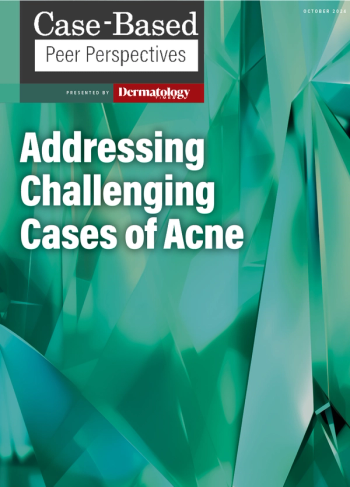
In a Dermatology Times Case-Based Roundtable event, James Del Rosso, DO, shared pearls for challenging acne cases.

With this combined administration, patients saw noticeable and lasting improvements in severe cases of AD.

Studies show conflicting serum levels of zinc and copper in vitiligo patients, indicating a need for further research.

The study represents the first to evaluate health care resource utilization among individuals with PN in England.
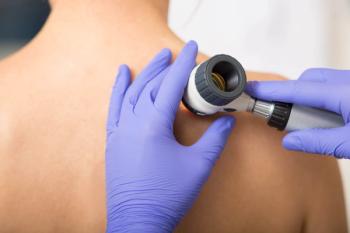
Developed by a panel of global dermatology experts, the SQS addresses the multifaceted nature of skin quality.

In this month's Cosmetic Conundrums column, explore 4 eyelash growth scenarios.

Results from Society for Melanoma Research Congress demonstrated excellent predictive power of noninvasive CP-GEP Merlin test.

Although further research is still needed, dermatologists and patients are generally satisfied with teledermatology treatment.

The app demonstrated high sensitivity (92.0%) and specificity (95.5%) in identifying skin changes through a controlled testing environment.
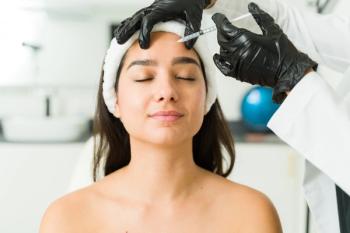
Along with this new transparency regarding treatments, patients are empowered to embrace more comprehensive beauty ideals.

In a Dermatology Times Case-Based Roundtable event, Chesahna Kindred, MD, MBA, FAAD, reviewed 2 cases of patients with vitiligo treated with ruxolitinib cream.
The new delivery systems for bimekizumab-bkzx represent an upgrade over previous 1 mL options, reducing the frequency of injections required.

Robb delved into how the system is transforming skin treatments with advanced precision, faster results, and improved patient outcomes.

The study design emphasizes elevated endpoints, particularly joint health, ensuring that the most relevant outcomes are prioritized for patient care.
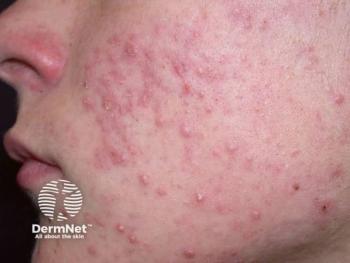
This new indication adds to existing clearance of a non-drug treatment for mild to severe inflammatory acne vulgaris.
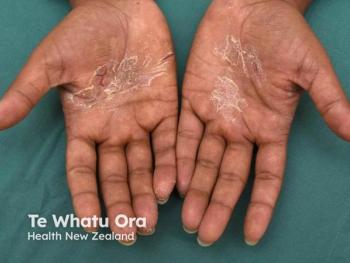
ALPHA compared alitretinoin and phototherapy for speed and efficacy when treating chronic hand eczema.
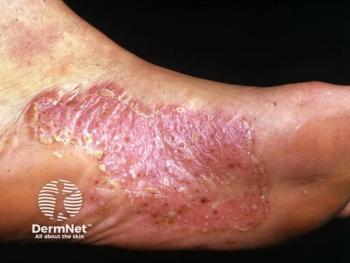
An 82-year-old woman with PPP and treated with roflumilast cream 0.3% achieved complete clearance after 5 weeks of treatment.
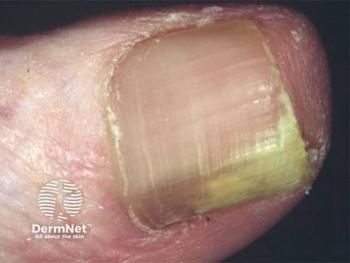
Efinaconazole demonstrated enhanced efficacy in treating nail fungal infections, thanks to its high penetration capability and low keratin binding.

Germany is now the first country to launch the topical treatment for adults with moderate to severe CHE.

Omar Noor, MD, FAAD, hosted a live Case-Based Roundtable discussion with local dermatology clinicians to discuss 2 patients with plaque psoriasis and what would be the ideal topical treatment for each.

Investigators noted that further research is needed to monitor the prevalence of cardiovascular disease in patients with vitiligo.

Renata Block, PA-C, and Karan Lal, DO, discuss the critical role of advanced practice providers in dermatology, the power of mentorship, and how collaborative learning improves patient outcomes.

Hui addresses one of the NEA's Eczema Awareness Month weekly themes, "Eczema is more than the visuals."
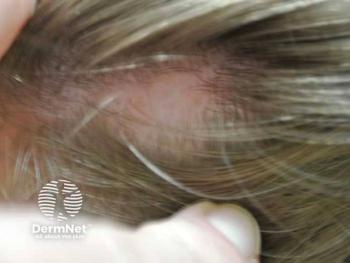
Researchers behind the trial saw a decrease in the Severity of Alopecia Tool (SALT) score from 31 to 11.2 after 3 months of treatment with brevilin-A.

Researchers behind the study emphasized the urgent need to enhance the diagnostic skills of primary care practitioners to improve early detection of psoriasis.

In October's cover feature, Nicole A. Negbenebor, MD, FAAD, discusses the benefits of intralesional 5-fluorouracil injection for older patients with squamous cell carcinoma who may elect to delay therapy or are not ideal candidates for surgery.

Review insights from expert faculty as they look forward to the upcoming Elevate-Derm conference.

In case you missed it, we had news about benzene in benzoyl peroxide acne products tested at room temperature, the FDA's approved sNDA for 3 tubes of aminolevulinic acid hydrochloride, phase 2b trial data of zasocitinib, and more.

The novel drug demonstrated tolerability for AK treatment when applied to a field of 100 cm2 of the face or scalp.