


Personalized treatment strategies for infectious skin diseases are being developed using AI algorithms that analyze individual patient data.
Personalized treatment strategies for infectious skin diseases are being developed using AI algorithms that analyze individual patient data.

Belleson addresses one of the NEA's Eczema Awareness Month weekly themes, “The eczema community is here to inspire you.”

This review of the latest dermatologic studies includes discussions on the relationship between atopic dermatitis and prurigo nodularis, the use of upadacitinib for treating PN, and more.

A study of the new cleanser included diverse participants, ensuring it is suitable for various skin types and sensitivities.
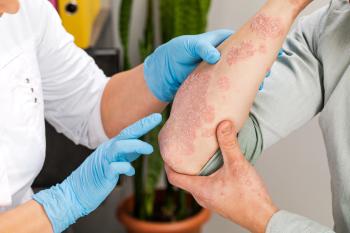
Posters at AMCP Nexus analyzed the burden of flares on patients with atopic dermatitis (AD) and the impact initiating ruxolitinib cream had on use of other therapies.
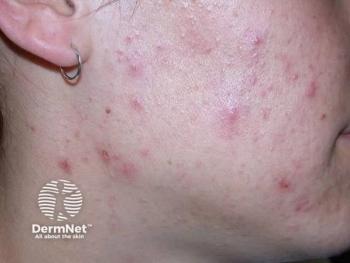
The clinical trial showed promising results for patients who used probiotics as an accompanying treatment.

Catch up on coverage from the final day of the 2024 Fall Clinical Dermatology Conference in Las Vegas, Nevada.

Discover top innovations, insights, and clinical pearls from Fall Clinical in Las Vegas, where dermatology’s biggest breakthroughs took center stage.
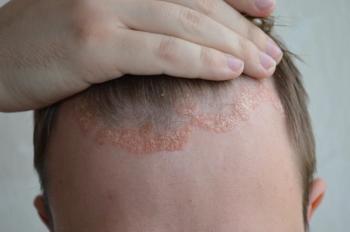
Deucravacitinib demonstrated significant efficacy and safety in treating moderate to severe scalp psoriasis, as shown in the PSORIATYK SCALP trial presented at Fall Clinical.

At Fall Clinical 2024, Ablon shared her top device-based interventions, from wound care to radiofrequency rejuvenation, revealing clinical pearls for enhanced aesthetic outcomes.

At Fall Clinical 2024, Christopher Bunick, MD, PhD, discussed systemic therapy options and the importance of comprehensive treatment targets in managing atopic dermatitis, emphasizing AHEAD recommendations and LEVEL UP data.

At Fall Clinical 2024, Graber spotlighted precise acne-targeting lasers, new combination creams, and a promising rosacea pill awaiting FDA approval.
Song shared top clinical tips at Fall Clinical, covering alopecia areata, refractory dermatoses, and novel non-steroidal topicals.
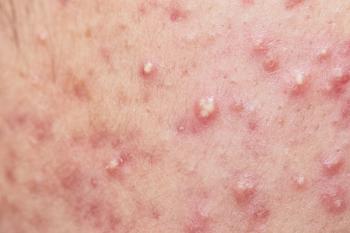
The recent meta-analysis revealed comparable efficacy in treating acne vulgaris and was presented at Fall Clinical 2024.

Catch up on coverage from the third day of the 2024 Fall Clinical Dermatology Conference in Las Vegas, Nevada.
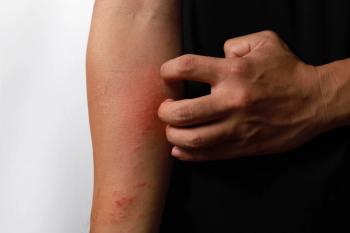
A poster presentation from Fall Clinical 2024 detailed the effect of rocatinlimab on SCORAD scores across baseline characteristic subgroups in adults with moderate to severe atopic dermatitis.

During an interview with Dermatology Times, Chovatiya outlined his Fall Clinical 2024 presentations on chronic hand eczema and early career controversies.

Aaron Farberg, MD, explores advancements in melanoma and cSCC prognostic tools, the role of gene expression profiling in inflammatory diseases, and initiatives aimed at supporting early-career dermatologists at Fall Clinical 2024.
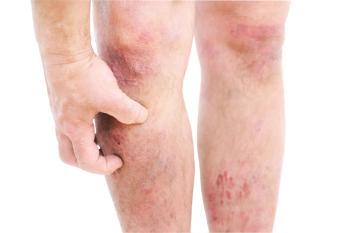
The phase 3b study shows Ebglyss reduced eczema severity and itch in challenging areas, with 60% of prior dupilumab patients meeting key improvement by week 24.

Joel Gelfand, MD, discusses insights on complex psoriasis cases, comorbidity management, and the evolving role of phototherapy at Fall Clinical 2024.
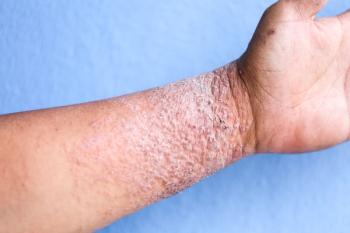
Adbry achieved EASI-75 in 92.9% and IGA 0/1 in 66.7% of AD patients, with a strong safety profile.
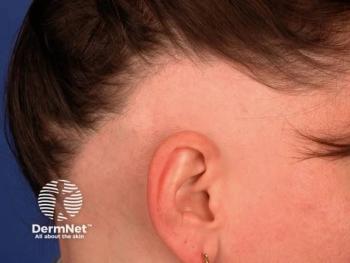
Sun Pharma presented long-term data on Leqselvi 8 mg tablets, showing significant scalp hair regrowth in severe alopecia areata patients.

Catch up on coverage from the second day of the 2024 Fall Clinical Dermatology Conference in Las Vegas, Nevada.
Shawn Kwatra, MD, reviews key highlights of his sessions at Fall Clinical 2024 on the latest updates in itch conditions.
Shahriari highlighted advanced dermatology treatments, clinical trial inclusivity, and key care strategies for complex skin conditions at Fall Clinical 2024.
Del Rosso reviews available and upcoming monoclonal antibodies, including nemolizumab, lebrikizumab, bimekizumab, and more.

Phase 3b study showed promise in clearing moderate PsO in sensitive areas for patients unresponsive to topical treatments.

Christopher Bunick, MD, PhD, presented the latest period 2 data at Fall Clinical 2024.
This review of the latest dermatologic studies includes discussions on the development of the Hand Eczema Impact Scale, the role of tofacitinib on Th1 and Th2 cytokines, and more.

Catch up on coverage from the first day of the 2024 Fall Clinical Dermatology Conference in Las Vegas, Nevada.