




Psoriasis
Latest News
Advertisement
Latest Videos

CME Content







Advertisement
More News

A study reveals that biologics targeting IL-12, IL-23, and IL-17 lower the risk of serious infections in older adults with psoriatic disease.

At the 2025 AAD Annual Meeting, Alumis Inc. presented promising phase 2 STRIDE trial results for ESK-001, a TYK2 inhibitor showing sustained psoriasis improvements over 52 weeks.

Panelists discuss how IL-17 inhibitors differ in their targets within the IL-17 pathway. Secukinumab and ixekizumab block IL-17A, reducing inflammation in psoriasis and arthritis. Brodalumab inhibits IL-17RA, affecting multiple IL-17 cytokines, but carries suicide risk warnings. Bimekizumab targets IL-17A and IL-17F, potentially enhancing efficacy but with added risk of infections. These differences impact efficacy, safety, and patient selection in inflammatory diseases.
Panelists discuss how IL-17 is a key pro-inflammatory cytokine in plaque psoriasis pathogenesis. It stimulates keratinocyte proliferation, promotes neutrophil recruitment, induces antimicrobial peptides, and up-regulates other inflammatory mediators, creating a self-perpetuating inflammatory cascade in lesional skin.

Nail psoriasis affects 50% of plaque psoriasis patients, making effective treatments crucial.

This real-world data explores the use of the IL-17A blocker for up to 3 years in several subtypes of psoriasis.

The investigational drug, designed using AI technology, optimizes pharmacologic characteristics for psoriasis treatment.

The LITE study found home-based narrowband UV-B phototherapy is as effective as office-based treatment for psoriasis, with higher adherence and lower costs.

99% of posts on the platform were of poor quality, according to the DISCERN instrument.

By leveraging the innovative biomarker panels, clinicians can now offer more personalized and effective treatment options for psoriasis and AD.

Bissonnette shared highlights and insights on the icotrokinra data presented at the AAD Annual Meeting.
New results from Alumis show a positive clinical response and safety profile after 52 weeks of treatment for patients with plaque psoriasis.

Johnson & Johnson’s JNJ-2113 showed promise for PsO, achieving high skin clearance with a strong safety profile.

Stark highlighted Bimzelx’s role in treating psoriasis and HS, introduced the BE BOLD study for PsA, and looked to future innovation in inflammatory skin disease.
According to a poster from AAD, the National Psoriasis Foundation’s treatment goals were used as a benchmark to determine the risk of developing psoriatic arthritis after initiating biologics.
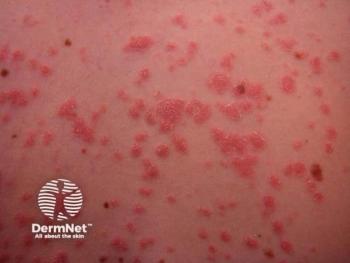
Findings suggest that most patients on risankizumab met or exceeded the National Psoriasis Foundation’s treatment goals.

At AAD 2025, Raj Chovatiya, MD, PhD, MSCI, explored the role of social determinants in AD, HS, and PsO, emphasizing the need for improved clinical recognition and inclusive research.
At AAD 2025, UCB will present 5-year data for Bimzelx in psoriasis, highlighting rapid, durable responses and long-term safety for patients.

Patrick Burnett, MD, PhD, shares key updates expected in 2025 for therapeutics treating atopic dermatitis, alopecia areata, and more.
Robinson shared insights into how the company is working to fight clinical research disparities.

Psoriasis trials are among the least diverse within dermatology, with participants predominantly being white men.


Belgian patients receiving biologics had faster response rates compared to phototherapy, systemic, and topical treatments.

Ustekinumab-kfce is available for the treatment of chronic autoimmune conditions like Crohn’s disease, ulcerative colitis, and plaque psoriasis.

This study highlights the urgent need for improved awareness, diagnosis, and treatment of inflammatory nail diseases in patients with skin of color.
Advertisement
Advertisement
Trending on Dermatology Times
1
FDA Accepts Galderma’s BLA Resubmission for Liquid Neuromodulator RelabotulinumtoxinA
2
AbbVie Files for Vitiligo Indication, Putting Systemic Therapy Under Regulatory Review
3
Icotrokinra Shows Superior Efficacy Over Advanced Oral Therapies in New Psoriasis Meta-Analysis
4
Introducing Dermatology Times NP/PA Connect
5