


Psoriasis
Latest News
Advertisement
Latest Videos
CME Content







Advertisement
More News

November's cover feature highlights the revolutionary role of artificial intelligence in the development of zasocitinib for the treatment of psoriasis.
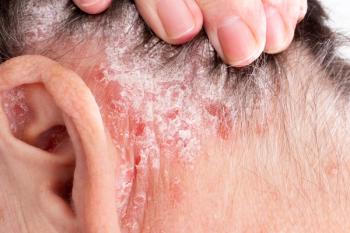
Higher stress hyperglycemia ratios are linked to elevated mortality risk in psoriasis, highlighting its systemic nature and need for intensive care.
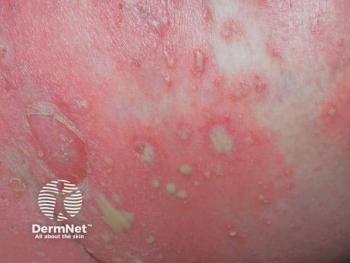
4 case histories highlight the physical and psychosocial burden of generalized pustular psoriasis.
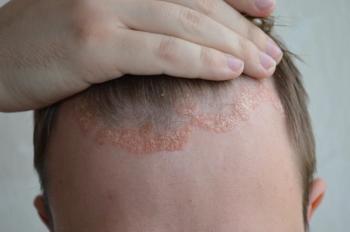
Deucravacitinib demonstrated significant efficacy and safety in treating moderate to severe scalp psoriasis, as shown in the PSORIATYK SCALP trial presented at Fall Clinical.

Joel Gelfand, MD, discusses insights on complex psoriasis cases, comorbidity management, and the evolving role of phototherapy at Fall Clinical 2024.

Phase 3b study showed promise in clearing moderate PsO in sensitive areas for patients unresponsive to topical treatments.
Del Rosso reviews numerous new and upcoming topical therapeutics and indications including ruxolitinib, tapinarof, and more.

In a recent Dermatology Times DermView video series, “Advancing Care in Pediatric Plaque Psoriasis: Emerging Treatments and Management Strategies," Karan Lal, DO, and Helen Shin, MD, discuss pediatric psoriasis and its prevalence.


Song stressed the need for careful therapy selection in patients with comorbid conditions to avoid exacerbating health issues.

Historically, research and clinical practice often have overlooked the distinct manifestations and treatment needs of patients with skin of color who have psoriasis.
E. James Song, MD, FAAD, provides key takeaways on the treatment of patients with plaque psoriasis, highlighting ways to define treatment success and the effect of adverse events on long-term treatment choices.
A dermatologist shares perspectives on patient-specific factors that impact treatment decisions in plaque psoriasis.

The new delivery systems for bimekizumab-bkzx represent an upgrade over previous 1 mL options, reducing the frequency of injections required.

Omar Noor, MD, FAAD, hosted a live Case-Based Roundtable discussion with local dermatology clinicians to discuss 2 patients with plaque psoriasis and what would be the ideal topical treatment for each.

Researchers behind the study emphasized the urgent need to enhance the diagnostic skills of primary care practitioners to improve early detection of psoriasis.

Otulfi from Formycon and Fresenius Kabi was approved simultaneously in the US and the European Union. In the US, it will launch in February 2025.
An expert on plaque psoriasis provides an overview of systemic therapy options and provides clinical insights on patient monitoring practices and best courses of action when treatment response isn’t sustained.
E. James Song, MD, FAAD, presents a case of a 58-year-old patient with location-specific mild-to-moderate plaque psoriasis.
The IL-17 inhibitor demonstrated biologic-level efficacy in moderate to severe plaque psoriasis.

Over 70% of patients achieved clear or minimal skin by week 48, with a 90% retention rate in diverse patients with PsO.
Melinda Gooderham, MSc, MD, FRCPC, emphasized the significance of the study’s results, showcasing stable laboratory parameters over a 12-week trial.
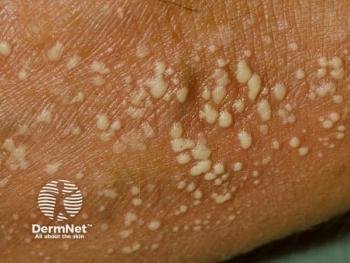
While researchers found both therapies effective in long-term use, they stated secukinumab showed quicker improvements in QoL.
A dermatologist provides clinical insights on navigating dose escalation and insurance barriers for patients receiving treatment for plaque psoriasis.
Continuing discussion on a case of a 45-year-old patient with plaque psoriasis, E. James Song, MD, FAAD, discusses management strategies for patients with mild-to-moderate plaque psoriasis.
Advertisement
Advertisement
Trending on Dermatology Times
1
FDA Accepts Galderma’s BLA Resubmission for Liquid Neuromodulator RelabotulinumtoxinA
2
AbbVie Files for Vitiligo Indication, Putting Systemic Therapy Under Regulatory Review
3
Introducing Dermatology Times NP/PA Connect
4
Icotrokinra Shows Superior Efficacy Over Advanced Oral Therapies in New Psoriasis Meta-Analysis
5