


Acne
Latest News
Advertisement
Latest Videos




CME Content





Advertisement
More News
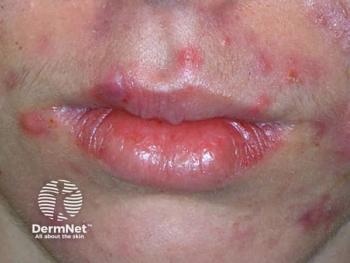
Explore innovative acne therapies, including bimekizumab, offering hope for treatment-resistant acne conglobata and improved patient outcomes.

At Elevate-Derm Summer, Shanna Miranti, MPAS, PA-C, highlighted practical strategies for isotretinoin prescribing, addressed the impact of iPLEDGE hurdles, and introduced the SkinSync podcast.
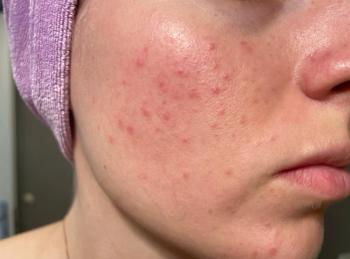
Global acne burden in reproductive-age women has risen significantly, with greater increases expected by 2040.

Discover how trifarotene, a novel retinoid, effectively addresses adult acne and its long-term effects, enhancing skin health and quality of life.
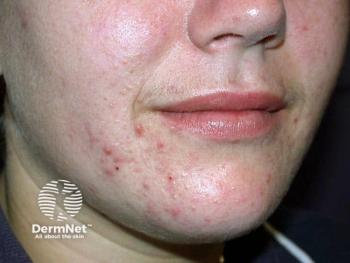
Discover the latest advancements in laser treatments for acne vulgaris, focusing on diverse skin types and effective solutions for acne skin of color.

Sonia Batra, MD, shares effective summer acne solutions using lasers such as Aerolase Neo Elite and AviClear, ensuring tailored care for optimal skin health.

Explore insights on benzoyl peroxide and benzene risks in acne treatment from experts Renata Block, DMSc, MMS, PA-C, and John Barbieri, MD, MBA.
Iris Rubin, MD, highlights SEEN's science-backed hair care, designed for acne-prone skin, improving scalp health and reducing irritation.

Iris Rubin, MD, reveals how her brand SEEN transforms hair products to combat acne, promoting clearer skin through innovative, skin-friendly formulations.

SkinGPT by Haut.AI uses AI to visually simulate skin care results, empowering inclusive, personalized skin care and bridging clinical data with patient insight.
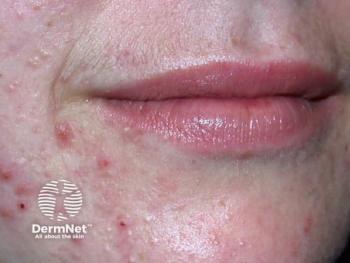
Sagimet Biosciences reveals denifanstat's promising phase 3 results, offering a novel oral treatment for moderate to severe acne with significant efficacy.
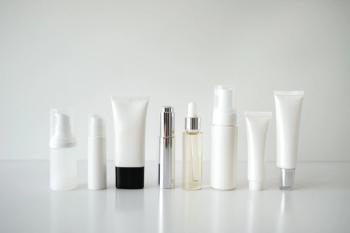
In March, popular acne products were recalled due to benzene contamination, raising safety concerns and highlighting the need for better quality control in skin care.
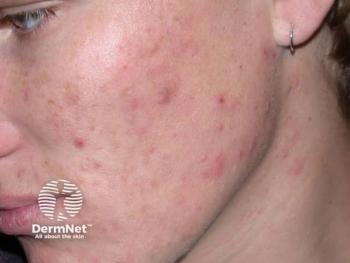
Discover how Shaant ClearSkin Probiotic offers a holistic approach to acne treatment by targeting gut health and hormonal balance for clearer skin.

Julia Zimmermann, PD, PHD's innovative cold plasma technology for acne treatment, developed through extensive research, promises effective results for clearer skin.

A new study highlights the significant long-term improvements in lesions and scarring of a clindamycin phosphate 1.2%, adapalene 0.15%, and benzoyl peroxide 3.1% formulation.
Discover how a novel nutraceutical significantly improves mild to moderate acne in a 12-week clinical trial, offering a holistic approach to skin health.

Even with the recent rise of social media guidance, patients still trust dermatologists over social media influencers for acne treatment.

Social media reshapes dermatology, but misinformation about acne treatments on platforms like TikTok raises concerns among clinicians and patients alike.

A study reveals that combining botulinum toxin A and hyaluronic acid significantly reduces acne-related enlarged pores, enhancing skin texture and patient satisfaction.

A new study reveals a significant link between acne prevalence and high BMI in Sudanese adolescents, highlighting gender differences and the need for further research.

Despite early psychological symptoms, over half of patients in the study completed their full treatment course.

Menopausal acne is rising yet underexplored; treatment must address hormonal shifts, skin sensitivity, and patient emotional well-being.
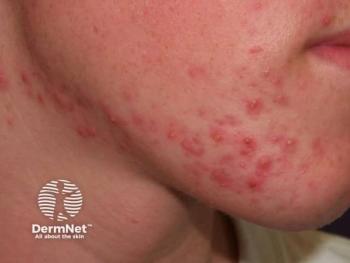
Microneedles successfully penetrated simulated skin barriers, suggesting their effectiveness in reaching sebaceous glands.

Nearly all patients saw improvements in small, medium, and large depressions on the cheeks and temples with just a singular treatment session.

The therapy, which combines clindamycin phosphate, adapalene, and benzoyl peroxide, was effective for Hispanic patients with moderate to severe lesions.
Advertisement
Advertisement
Trending on Dermatology Times
1
FDA Accepts Galderma’s BLA Resubmission for Liquid Neuromodulator RelabotulinumtoxinA
2
AbbVie Files for Vitiligo Indication, Putting Systemic Therapy Under Regulatory Review
3
Introducing Dermatology Times NP/PA Connect
4
Icotrokinra Shows Superior Efficacy Over Advanced Oral Therapies in New Psoriasis Meta-Analysis
5