




Acne
Latest News
Advertisement
Latest Videos

CME Content






Advertisement
More News

As someone who practices dermatology, it can often be difficult to determine if any of these new skin care trends are efficacious.

In this week’s Pointers With Portela, the 208SkinDoc discusses dangerous skin care marketing to watch out for.

Despite its black box warning, isotretinoin does not appear to increase the risk of suicide in acne patients, a finding investigators say is reassuring in their latest research.
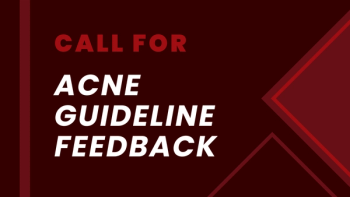
We want to hear from you. Please take the time to respond to our survey.
In this week’s Pointers With Portela, the 208SkinDoc reviews a potentially misleading acne vitamin from Clearstem Skincare.

Barbieri spoke with Dermatology Times to discuss the new guidelines and the recommendations and good practice statements included.
We want to know your thoughts on the recent guidelines. Share with us by answering our poll or emailing us at DTEditor@mmhgroup.com.

Click here to answer this week’s acne poll.

Shanna Miranti, MPAS, PA-C, shares updates on the status of roflumilast foam 0.3% and Cabtreo available in US pharmacies.

There’s nothing worse than having OTC products fight back against the progress we make with our prescription therapies.

The guidelines update the American Academy of Dermatology’s 2016 recommendations for acne management in adults, adolescents, and children aged 9 and older.

A population-based study found a 63% increase in isotretinoin use in the years 2004 to 2019, and an increase in isotretinoin-exposed pregnancies as well.

Investigators explained how the trial is structured to inhibit facial sebum production and inflammation among nearly 500 study participants.
In this week’s Pointers With Portela, the 208SkinDoc compares Accutane to 5 Aminolevulinic acid with red light therapy.
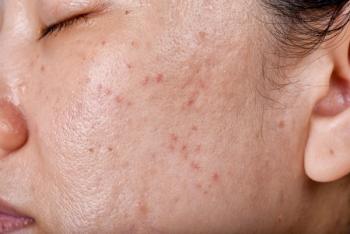
This article will discuss insights from research studies and offer specialized guidance aimed at dermatologists in hopes of fostering patient adherence in acne management.

Researchers found that high levels of AST and ALT in patients with acne taking oral isotretinoin was low in incidence.
In this week’s Pointers With Portela, the 208SkinDoc reviews 7 different methods to treat acne without isotretinoin.

The pilot study explored the use of double-conjugated retinoid serum used in combination with exfoliating peel pads.
In this week’s Pointers With Portela, the 208SkinDoc reveals his 5 essential acne care tips.

As 2023 comes to a close, Dermatology Times is taking a look back at the studies, therapies, and advances in acne this year.
The most prevalent psychological disorder among patients was anxiety.
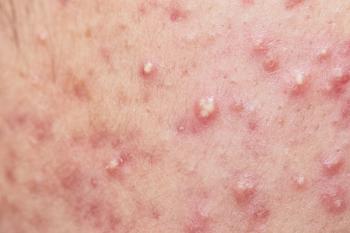
Researchers have explored whether the adverse effects of tazarotene are exacerbated during the colder winter months and whether there is variation in treatment efficacy and tolerability between cold vs warm seasons.
Linda Stein Gold, MD, reviewed recent studies of various topical retinoids and their ability to decrease atrophic scars during the 2023 ARM Yourself With Knowledge webinar.
Baldwin reviewed inflammatory bowel disease, depression, and pregnancy during the 2023 ARM Yourself With Knowledge webinar.
Click here to answer this week's acne poll.
Advertisement
Advertisement
Trending on Dermatology Times
1
FDA Accepts Galderma’s BLA Resubmission for Liquid Neuromodulator RelabotulinumtoxinA
2
AbbVie Files for Vitiligo Indication, Putting Systemic Therapy Under Regulatory Review
3
Icotrokinra Shows Superior Efficacy Over Advanced Oral Therapies in New Psoriasis Meta-Analysis
4
Introducing Dermatology Times NP/PA Connect
5