



Acne
Latest News
Advertisement
Latest Videos

CME Content







Advertisement
More News

The Sun Pharma survey included 1003 respondents with mild to moderate acne.

Allison Arthur, MD, discussed the importance of tailoring a treatment plan for adult women with acne vulgaris that best suits their lifestyle and current needs.
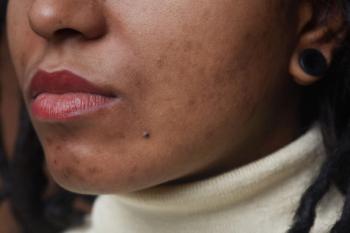
A post hoc analysis evaluated the safety, efficacy, and tolerability of IDP-126 gel in Black patients with moderate to severe acne, of which there are limited data and literature describing its outcomes in this patient population.
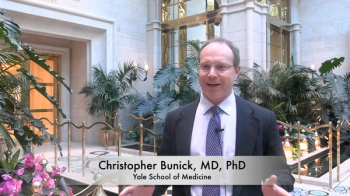
Christopher Bunick, MD, PhD, reviews Cabtreo’s recent FDA approval and what the new triple-combination gel means for acne patients.

The US Food and Drug Administration has approved IDP-126 gel for patients with acne.

Hilary Baldwin, MD, offers her insights and hypotheses regarding the future of over-the-counter and pharmaceutical treatments, emphasizing the evolving landscape and the potential role of targeted microbiome-based approaches in the management of acne.
Hilary Baldwin, MD, shares her thoughts on the importance of the Science of Skincare summit and emphasizes the significance of this event in disseminating clinically sound insights into over-the-counter active ingredients.
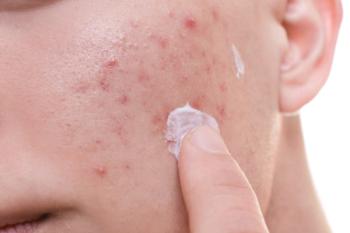
Overall, acne events were mild or moderate and did not cause patients to discontinue ruxolitinib cream treatment.

Aaron Farberg, MD, and Shanna Miranti, MPAS, PA-C, discuss the upcoming approvals of nivolumab and IDP-126.
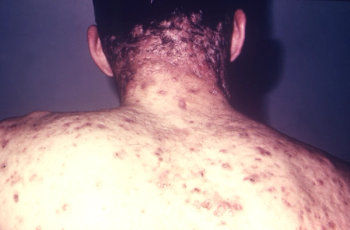
The impact of acne conglobata on individuals underscores the crucial role dermatologists play in providing effective diagnosis, treatment, and emotional support.

In this week’s Pointers With Portela, the 208SkinDoc reviews his tips for treating blackheads and whiteheads, as well as recommended products.

Click here to answer this week's acne poll.
In this week’s Pointers With Portela, the 208SkinDoc reviews fungal acne and his recommended treatment strategy.

Yale School of Medicine researchers found tetracycline-class antibiotics were the most prescribed acne treatment for adult female patients between 2002 and 2016.

While some resistance was noted against azithromycin, clindamycin, and erythromycin, they were not statistically significant.

Dermatologists will debunk incorrect information found online and educate content creators.

Treatments using lasers and microneedling for acne and acne scarring have grown in recent years, offering patients more options.
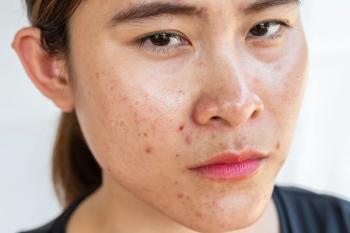
A panel of 9 dermatologists met and created 5 statements regarding the role of ceramide-containing skin care products in reducing skin barrier dysfunction related to acne treatments.
Click here to answer this week's acne poll.
Catch up on acne vulgaris treatment pearls from Dermatology Times’ most recent Frontline Forum series, featuring James Del Rosso, DO; Hilary Baldwin, MD; Neal Bhatia, MD; Christopher Bunick, MD, PhD; and Leon Kircik, MD.

Learn more about the in-depth topics covered in the August 2023 Frontline Forum acne vulgaris supplement of Dermatology Times.

In the final part of this Frontline Forum series, James Del Rosso, DO; Hilary Baldwin, MD; Neal Bhatia, MD; Christopher Bunick, MD, PhD; and Leon Kircik, MD, discuss the use of clascoterone cream 1%, differences in isotretinoin formulations, targeting sebum production, acne guidelines for patient care, and more.
In part 3 of this Frontline Forum series, James Del Rosso, DO; Hilary Baldwin, MD; Neal Bhatia, MD; Christopher Bunick, MD, PhD; and Leon Kircik, MD, discuss the use of clascoterone cream 1%, differences in isotretinoin formulations, targeting sebum production, acne guidelines for patient care, and more.

ABO blood type appeared to be a factor in severity of acne vulgaris.
In part 2 of this Frontline Forum series, James Del Rosso, DO; Hilary Baldwin, MD; Neal Bhatia, MD; Christopher Bunick, MD, PhD; and Leon Kircik, MD, discuss the use of clascoterone cream 1%, differences in isotretinoin formulations, targeting sebum production, acne guidelines for patient care, and more.
Advertisement
Advertisement
Trending on Dermatology Times
1
FDA Accepts Galderma’s BLA Resubmission for Liquid Neuromodulator RelabotulinumtoxinA
2
AbbVie Files for Vitiligo Indication, Putting Systemic Therapy Under Regulatory Review
3
Icotrokinra Shows Superior Efficacy Over Advanced Oral Therapies in New Psoriasis Meta-Analysis
4
Introducing Dermatology Times NP/PA Connect
5