


Roflumilast maintained disease control when patients switched to twice-weekly dosing.
Roflumilast maintained disease control when patients switched to twice-weekly dosing.

The review found that utilizing dupilumab to treat these patients with AD cost more than using baricitinib, although dupilumab was more effective.

As we approach National Eczema Week and National Eczema Month, take a look at the most influential atopic dermatitis research from the last decade.

Perifollicular infundibulo-isthmic lymphocytoplasmic infiltrates and fibrosis appeared in all patients, regardless of ethnicity.

Patients treated by rheumatologists were more often treated with tumor necrosis factor inhibitors.

Click here to answer this week's skin cancer poll.
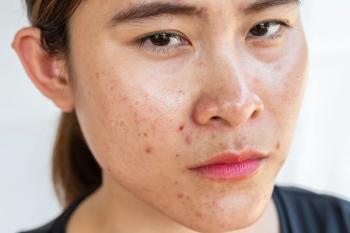
A panel of 9 dermatologists met and created 5 statements regarding the role of ceramide-containing skin care products in reducing skin barrier dysfunction related to acne treatments.

The VIOLIN study examined the burden of disease, prevalence, and treatment of vitiligo in patients in France.

Melanoma cases were almost 10 times higher in high Human Development Index countries than in low.

In this week’s Pointers With Portela, the 208SkinDoc takes an in-depth look at Merkel cell carcinoma after Jimmy Buffett passed away from a 4-year battle with the rare form of skin cancer.

Dermatology Times is reflecting on this summer's dermatology conferences with a recap of our top 3 articles from Fall Clinical, Maui Derm, World Congress, SDPA, and SPD.

Two poster presentations at this year’s Society for Pediatric Dermatology Meeting delve into the psychological impact of the condition and a new option for management.
Click here to answer this week's acne poll.

Endocrine toxic effects were more likely than nonendocrine to become chronic and continue at last follow-up.

Researchers found no statistically significant difference between injection techniques.
Catch up on acne vulgaris treatment pearls from Dermatology Times’ most recent Frontline Forum series, featuring James Del Rosso, DO; Hilary Baldwin, MD; Neal Bhatia, MD; Christopher Bunick, MD, PhD; and Leon Kircik, MD.
This Skin Care Awareness Month, Dermatology Times wants to hear your insights. Click here to answer this week's poll.

Apremilast treatment for psoriasis and psoriatic arthritis can be managed effectively through telehealth visits.
Keep up with the latest headlines in dermatology from the past week, including excimer laser market projections, an innovative skin health app developed by a California teenager, and more.

ICYMI, this week we had articles about lowered infection risks with IL23i and IL-17i, a new trio combination cream for melasma treatment, tralokinumab's success among older patients with AD, and more.

In the cohort trial, 85% of patients showed an improvement of more than 50 on PASI.

Quality of life and sexuality were somewhat affected in 51.9% of adults who had been diagnosed with vulvar lichen sclerosus in childhood or adolescence.
Click here to answer this week’s poll.

Both modalities achieved positive results and accurate ablation in cultured epithelial sheets transplantation for patients with vitiligo.

Learn more about the in-depth topics covered in the August 2023 Frontline Forum acne vulgaris supplement of Dermatology Times.

Patricia Farris, MD, and Ted Lain, MD, MBA, co-chairs of the Science of Skincare Summit, discuss their excitement for the September conference and its innovative educational experience.
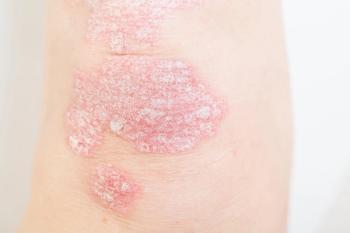
The findings highlight new data on AXL expression in inflammatory diseases.

After 4 weeks of daily use, 92% of participants showed an improvement in skin hydration.

The procedure was both effective and safe in a small cohort of patients with refractory hidradenitis suppurativa of the axilla.