



Vitiligo
Latest News
Advertisement
Latest Videos

CME Content







Advertisement
More News

Researchers stated the findings highlight the need for integrated dermatological and psychological treatment approaches.

New Genetic Study Reveals Bidirectional Causal Link Between Vitiligo and Autoimmune Thyroid Diseases
The study found a genetic link between vitiligo and autoimmune thyroid diseases, but no similar link with autoimmune hepatitis or Graves' disease.

Conversely, there were higher levels of selenium and folic acid detected in patients with vitiligo versus otherwise healthy individuals.

The study found patients with vitiligo are at a lower risk of developing PD, but those with comorbid PD could face elevated mortality rates.

David Rosmarin, MD, shares key points from phase 3 data of ruxolitinib for vitiligo, as well as highlights the potential for targeting the STAT pathway in upcoming atopic dermatitis therapeutics.

Karan Lal, DO, dives into the benefits of combination therapy for vitiligo with topicals and devices.
Nanette Silverberg, MD, shares data on the efficacy of on- and off-label therapeutics for vitiligo, as well as the importance of communication with patients to promote clinical excellence.

Data from the TRuE-V mechanism of action study was presented in a poster at the 2024 RAVE Conference.

Nanette Silverberg, MD, shares her excitement about the inclusion of vitiligo at this year’s RAVE meeting.
Rocco Serrao, MD, FAAD, addresses potential barriers to access and affordability of narrowband UVB phototherapy and topical medications for vitiligo treatment, while highlighting available resources to assist patients in overcoming these obstacles.
Rocco Serrao, MD, FAAD, discusses a case of a 38-year-old male with progressive vitiligo, exploring potential triggers and exacerbating factors, as well as lifestyle changes and treatment options to manage symptoms and improve quality of life.
Dr Serrano, shares insights on the panel’s advice given to their patients with vitiligo who have achieved remission through treatment with ruxolitinib, while also addressing the challenges of navigating payer coverage for vitiligo treatments and strategies for dealing with coverage denials.

The primary efficacy endpoint is the proportion of subjects achieving at least a 50% improvement in the Facial Vitiligo Area Scoring Index.

These findings may provide guidance for future international definitions of degrees of activity and repigmentation in vitiligo.

VYNE Therapeutics' Iain Stuart, PhD, spoke with Dermatology Times to discuss recent phase 1 and pre-clinical data for VYN201 for vitiligo.

VYNE expects to enroll the first patient with vitiligo in the phase 2b trial for VYN201 in the second quarter of 2024.
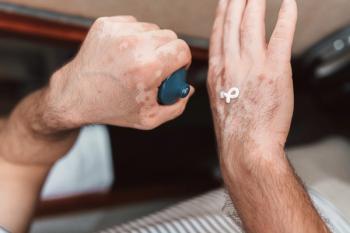
Topical Bacitracin, Neosporin, and Vaseline were applied to mice over a 6-week period.

In addition, authors of a research letter noted that patients with vitiligo demonstrated a comparable risk of myocardial infarction and cerebrovascular accident.

A new review highlighted JAK inhibitors' role in vitiligo treatment, emphasizing varying benefits, facial efficacy, and potential for sustained responses.

Combining fire needle therapy with a 308 nm excimer laser for vitiligo treatment, as per a recent meta-analysis, was deemed both safe and effective.

Three distinct congresses known as RAVE (Revolutionizing Atopic Dermatitis, Alopecia Areata, and Vitiligo) will be held June 8-10, in Chicago, Illinois.
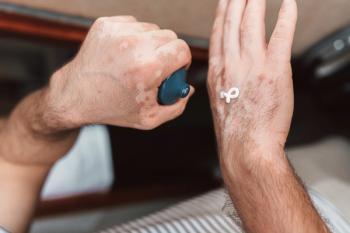
Microneedling With and Without N-acetylcysteine Prove Effective in Patients With Persistent Vitiligo
While the addition of NAC yielded greater improvement than microneedling alone, this difference was not significant.

A recent study aimed to investigate the risk of myocardial infarction, cerebrovascular accident, peripheral vascular disease, and pulmonary embolism in patients with vitiligo.

Povorcitinib is being evaluated for non-segmental vitiligo, hidradenitis suppurativa, prurigo nodularis, asthma, and chronic spontaneous urticaria.

The study uncovered sexual dimorphism in melanocyte stem cell migration rates due to UVB-induced inflammatory responses in mice.
Advertisement
Advertisement
Trending on Dermatology Times
1
FDA Accepts Galderma’s BLA Resubmission for Liquid Neuromodulator RelabotulinumtoxinA
2
AbbVie Files for Vitiligo Indication, Putting Systemic Therapy Under Regulatory Review
3
Icotrokinra Shows Superior Efficacy Over Advanced Oral Therapies in New Psoriasis Meta-Analysis
4
Introducing Dermatology Times NP/PA Connect
5