



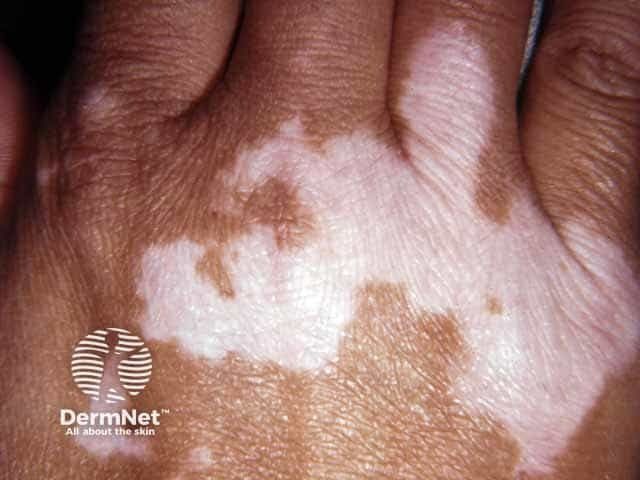

Vitiligo
Latest News
Advertisement
Latest Videos
CME Content







Advertisement
More News

Learn more about the in-depth topics covered in the November 2024 AD and Vitiligo supplement of Dermatology Times.

Andrew Alexis, MD, MPH, discusses how, in creating individualized treatment plans for vitiligo, clinicians must carefully consider the distinct challenges and response patterns associated with segmental vs nonsegmental forms, as segmental vitiligo tends to be more stable after initial progression but often more resistant to treatment, while nonsegmental vitiligo typically shows a more unpredictable course requiring ongoing management strategies.
The panelist discusses the primary challenges in vitiligo repigmentation, including maintaining patient compliance through lengthy treatment courses and managing expectations around partial repigmentation outcomes, which require careful monitoring and ongoing patient education about realistic goals while assessing success through standardized documentation of even minimal improvements to inform treatment adjustments.
Andrew Alexis, MD, MPH, discusses how holistic management of vitiligo requires addressing both the physical and psychological impact through empathetic counseling and support groups while setting realistic treatment expectations and timelines with patients through clear communication about repigmentation goals, potential outcomes, and available therapeutic options.

Lisa Swanson, MD, discusses how telemedicine and digital health tools can aid in the management and follow-up care of pediatric patients with vitiligo by enabling remote monitoring, improving access to specialists, and facilitating patient engagement, while emerging research into vitiligo treatments may focus on developing therapies to halt or slow the progression of this autoimmune skin condition.
The panelist discusses advances in targeted therapies, including novel biologics and small molecules, as well as the development of personalized treatment approaches tailored to individual patient characteristics, which hold great promise for improving outcomes and enhancing the quality of life for children living with vitiligo in the future.
Lisa Swanson, MD, discusses providing educational resources and materials that explain vitiligo, dispel myths, and promote understanding.

In a Dermatology Times Case-Based Peer Perspective event, Terry Faleye, MPAS, PA-C, reviewed 2 cases of patients with vitiligo to discuss innovative treatments and emotional challenges with disease management.

Researchers stated the dual-action therapy could offer a promising approach to treat progressive non-segmental vitiligo.

VYNE Therapies announces that aNSV patients saw disease improvement without serious adverse effects.

Learn more about the in-depth topics covered in the October 2024 vitiligo supplement of Dermatology Times.
In a Dermatology Times Case-Based Roundtable event, Pearl E. Grimes, MD, FAAD, reviewed 2 cases of patients with vitiligo treated with ruxolitinib.
In a Dermatology Times Case-Based Roundtable event, Ted Lain, MD, MBA, FAAD, reviewed 2 cases of patients with vitiligo treated with ruxolitinib.

Studies show conflicting serum levels of zinc and copper in vitiligo patients, indicating a need for further research.
In a Dermatology Times Case-Based Roundtable event, Chesahna Kindred, MD, MBA, FAAD, reviewed 2 cases of patients with vitiligo treated with ruxolitinib cream.

Investigators noted that further research is needed to monitor the prevalence of cardiovascular disease in patients with vitiligo.
In a Dermatology Times Case-Based Roundtable event, Andrew Alexis, MD, MPH, FAAD, reviewed 3 cases of patients with vitiligo treated with ruxolitinib cream.
A review examined how vitiligo treatments aim to restore melanocyte function through grafting, phototherapy, immune regulation, antioxidants, and stem cell research.

Researchers behind the review suggested that future research should prioritize large-scale trials to confirm abrocitinib's long-term safety and efficacy in various skin disorders.
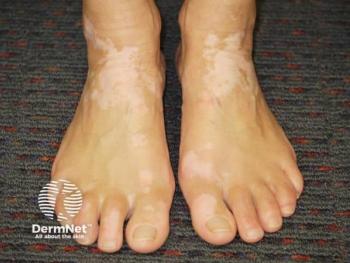
Researchers found that MBEHQ treatment increased oxidative stress and proinflammatory cytokines IL-1β and IL-18 in patients with vitiligo.

Catch up on the latest news on vitiligo advancements in 2024.

The study is actively recruiting participants at multiple sites across the US.
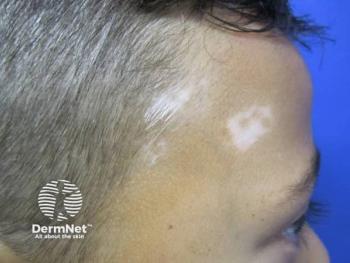
The study showed significant improvement in repigmentation with silymarin, with patients of different sexes benefiting equally, though monthly differences were not significant.

The 83-year-old patient was being treated for mycosis fungoides.

42 studies with 1027 cases evaluated drugs like bimatoprost and apremilast for vitiligo.
Advertisement
Advertisement
Trending on Dermatology Times
1
FDA Accepts Galderma’s BLA Resubmission for Liquid Neuromodulator RelabotulinumtoxinA
2
AbbVie Files for Vitiligo Indication, Putting Systemic Therapy Under Regulatory Review
3
Icotrokinra Shows Superior Efficacy Over Advanced Oral Therapies in New Psoriasis Meta-Analysis
4
Introducing Dermatology Times NP/PA Connect
5