


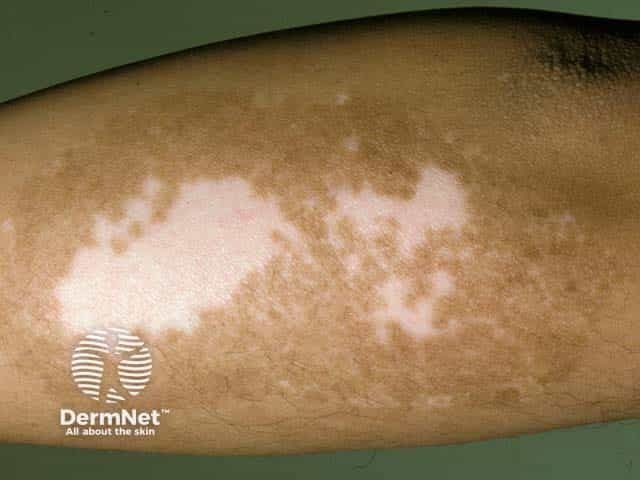




Vitiligo
Latest News
Advertisement
Latest Videos



CME Content







Advertisement
More News

The significance of patient education and setting realistic expectations for the often-slow process of repigmentation in vitiligo treatment was a key focus of the discussion.

Compared to patients with rheumatoid arthritis and atopic dermatitis, those with vitiligo had a lower incidence of major adverse effects.

AbbVie’s phase 2 study demonstrates how upadacitinib reduces type 1 inflammation and boosts melanocyte biomarkers to drive vitiligo response.

The analyzed dataset included over 200,000 patients with vitiligo to find trends in diagnosis, treatment, and more.

Serota and other field experts discussed best practices as well as new therapeutics.

Findings suggest that this novel treatment approach can enhance the quality of life for vitiligo patients without increasing the risk of adverse events.

A study found that vitiligo patients had a higher incidence of COVID-19 than those with psoriasis or atopic dermatitis.

Each treatment saw very mild clinical and dermatologic responses with low levels of patient satisfaction.

Nanette Silverberg, MD, discusses new treatments for pediatric vitiligo, including JAK inhibitors and surgical advancements.

Nada Elbuluk, MD, MSc, emphasizes that medical treatments remain first-line for vitiligo, but stable cases may benefit from surgical options.

In his presentation at Winter Clinical Miami, Del Rosso covered a variety of topics including refractory pediatric vitiligo.

Emerging noninvasive imaging technologies, particularly optical coherence tomography, offer a revolutionary approach to monitoring vitiligo treatment responses.

Although more evidence is needed, CNNs could potentially be most effective in diagnosing patients with vitiligo.

Repibresib’s localized delivery minimizes systemic exposure while targeting inflammatory pathways, a novel approach for vitiligo management.

As 2024 comes to a close, Dermatology Times is taking a look back at the studies, therapies, and advances in vitiligo this year.

Larry Eichenfield, MD, discusses how fostering transparent communication with families affected by pediatric vitiligo involves addressing their concerns, setting realistic treatment expectations, providing emotional support, and empowering parents to be advocates for their children’s physical and emotional well-being.
Larry Eichenfield, MD, discusses how pediatric vitiligo can profoundly impact a child’s mental health, self-esteem, and social relationships, requiring a comprehensive care approach that includes psychological support, family counseling, and strategies to help children navigate peer interactions and build resilience.
Larry Eichenfield, MD, discusses how vitiligo manifests uniquely in children through its earlier onset patterns, rapid progression phases, specialized diagnostic challenges for developing skin, and modified treatment approaches that must carefully balance effectiveness with safety concerns for young patients.

Karan Lal, DO; Lisa Swanson, MD; James Song, MD; Andrew Alexis, MD, MPH; and Lawrence Eichenfield, MD, discussed the complexities of vitiligo care and the potential of innovative topical therapies.
Researchers emphasized the need for future studies to refine protocols and address economic barriers to combination therapy.

Karan Lal, DO, MS, FAAD, discusses how to balance safety and efficacy considerations while promoting treatment adherence in young vitiligo patients, focusing on the unique challenges and monitoring requirements for this vulnerable population.
Karan Lal, DO, MS, FAAD, discusses how to optimize vitiligo management in pediatric patients through personalized treatment selection and age-appropriate counseling strategies that address both the physical and psychosocial aspects of the condition.
2024 saw significant progress in vitiligo treatments, including novel drugs, off-label uses, and updated pediatric guidelines for better outcomes.

Explore key insights and innovations in vitiligo from 2024, from treatment advances to patient-focused strategies.
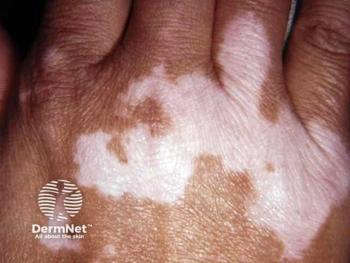
LOV has unique clinical traits, epidemiology, and treatment responses compared to early-onset vitiligo, underscoring the need for a tailored management approach.
Advertisement
Advertisement
Trending on Dermatology Times
1
FDA Accepts Galderma’s BLA Resubmission for Liquid Neuromodulator RelabotulinumtoxinA
2
AbbVie Files for Vitiligo Indication, Putting Systemic Therapy Under Regulatory Review
3
Icotrokinra Shows Superior Efficacy Over Advanced Oral Therapies in New Psoriasis Meta-Analysis
4
Introducing Dermatology Times NP/PA Connect
5