


Atopic Dermatitis
Latest News
Advertisement
Latest Videos


CME Content







Advertisement
More News

A PDUFA target action date has been set for October 13, 2025.


At the Horizons in Advanced Practice meeting, Lakshi Aldredge, MSN, ANP-BC, DCNP, FAANP, presented a case of a female patient aged 12 years with moderate AD that had been worsening over the past several months.
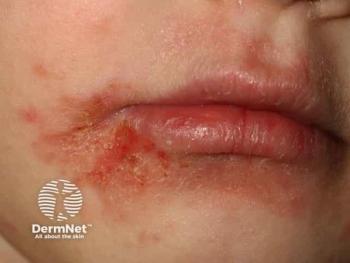
Lead author on recent research, Lawrence Eichenfield, MD, said if approved, this treatment could fill a “significant gap.”
Panelists discuss the topical treatment option roflumilast for pediatric atopic dermatitis, exploring its mechanism of action, efficacy, safety, and potential role in managing the condition.

The panelist discusses how systemic atopic dermatitis therapies now emphasize targeted biologics and Janus kinase inhibitors, requiring personalized approaches, comprehensive monitoring, and holistic patient management.
The panelist discusses how a 28-year-old woman with moderate atopic dermatitis requires personalized, comprehensive management addressing hand involvement, corticosteroid concerns, and potential Janus kinase (JAK) inhibitor therapy, focusing on symptom relief, safety, and patient-specific factors.
Panelists discuss the latest advances in topical treatments for pediatric atopic dermatitis, covering newly available options and those on the horizon with a focus on their mechanisms of action, efficacy, and safety profiles.

At the Horizons in Advanced Practice meeting, Omar Noor, MD, FAAD, presented a case of a woman aged 25 years who presented with erythematous and scaly patches on her face, neck, and upper trunk.

Alphyn’s therapy uniquely treats both the immune system and bacterial components of atopic dermatitis.

Jonathan Zalevsky, PhD, discusses the unmet needs in atopic dermatitis treatment, the potential of Rezpeg, and the importance of novel therapies.
Jonathan Zalevsky, PhD, discusses the fundamentally different path of Rezpeg compared with existing IL-4 and IL-13 inhibitors in atopic dermatitis.
The panelist discusses how a 35-year-old man with atopic dermatitis requires personalized, comprehensive management considering skin of color complexities, focusing on trigger identification, targeted therapies like dupilumab, and holistic approach to inflammation, skin barrier protection, and aesthetic concerns.
Panelists discuss the unique challenges of managing atopic dermatitis in children compared with adults, focusing on factors such as skin barrier differences, treatment adherence, and the impact on growth and development.
The panelist discusses how an 8-year-old girl with moderate to severe atopic dermatitis requires a comprehensive treatment approach focusing on dupilumab as a potential systemic therapy. Treatment goals include reducing inflammation, improving quality of life, and providing age-appropriate, empathetic care while addressing patient and caregiver concerns about efficacy and safety.
Panelists discuss the mental and physical burden of atopic dermatitis on pediatric patients and their caregivers and share approaches to addressing the psychosocial impact of the condition, highlighting how these factors influence treatment selection and care strategies.

The article highlights the immense global burden of atopic dermatitis, the most common chronic inflammatory skin disease, affecting over 200 million individuals worldwide.
Zalevsky shares insights into the implications of the designation and what it may mean for Rezpeg's development timeline.

Adelaide A. Hebert, MD, FAAD, stressed the importance of educating patients, setting realistic expectations, and ensuring they adhere to AD treatment plans.

Alexandra Golant, MD, led a Dermatology Times Case-Based Roundtable® event that focused on advancing therapeutic strategies for atopic dermatitis.

Hawkes discusses urticaria subtypes, treatments, and emerging therapies like dupilumab and remibrutinib.

At the Horizons in Advanced Practice meeting, Douglas DiRuggiero, DMSc, MHS, PA-C, presented a case of a woman aged 27 years who had eczematous lesions covering more than 20% of her BSA.

New drugs targeting IL-4, IL-13, and IL-31 pathways provide options for tailored eczema treatments.

Lisa Weiss, MMSc, PA-C, and colleagues offered insights on managing severe atopic dermatitis cases with biologics, nonsteroidal treatments, and strategies for addressing physical and emotional impacts.
Panelists discuss how atopic dermatitis is linked to other type 2 inflammatory conditions in the pediatric population, exploring the shared immune pathways and comorbidities that connect these disorders.
Advertisement
Advertisement
Trending on Dermatology Times
1
AbbVie Files for Vitiligo Indication, Putting Systemic Therapy Under Regulatory Review
2
Icotrokinra Shows Superior Efficacy Over Advanced Oral Therapies in New Psoriasis Meta-Analysis
3
Nutrafol Expands Portfolio with First and Only Hair Loss Supplement for Male Patients 50 and Older
4
Introducing Dermatology Times NP/PA Connect
5