

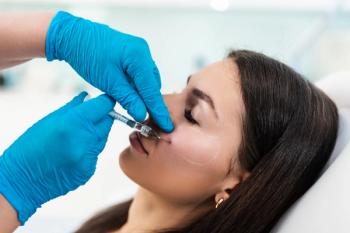
The HA filler with tri-hyal technology reduced wrinkles on the forehead, upper lip, cheek folds, and crow’s feet for up to 18 months.
Marie Bosslett is the assistant editor of Dermatology Times® and joined the MJH Life Sciences team in October 2024. She attended Loyola University Maryland in Baltimore and earned a Bachelor of Arts in Communication with minors in marketing and writing. When she’s not writing, Marie enjoys going to concerts, reading on the beach, and spending time with friends and family.
The HA filler with tri-hyal technology reduced wrinkles on the forehead, upper lip, cheek folds, and crow’s feet for up to 18 months.

The results showed promising improvements in all endpoints with high patient satisfaction and no safety concerns.
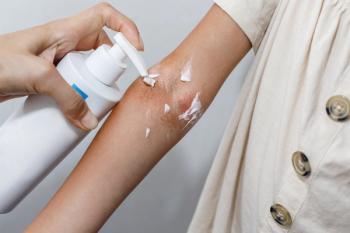
More improved skin hydration and barrier function was observed in moisturizers with anti-inflammatory ingredients, compared to those without.

In case you missed it, this week we had news about a significant dual treatment approach for AD, organic filter-based sunscreens for sensitive skin, what we’re most looking forward to in 2025, and more.
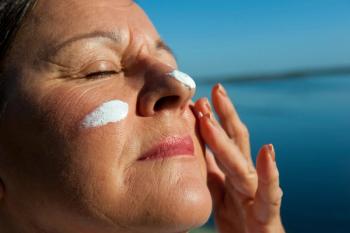
After 8 weeks of use, the product showed improvements in skin sensitivity, transepidermal water loss, and skin corneum hydration.

Real-world data from TARGET-DERM AD revealed that those with both reduced itch and clearer skin had the lowest levels of disease burden.

As 2024 comes to a close, Dermatology Times is taking a look back at the studies, therapies, and advances in skin cancer this year.

As 2024 comes to a close, Dermatology Times is taking a look back at the studies, therapies, and advances in acne this year.
As 2024 comes to a close, Dermatology Times is taking a look back at the studies, therapies, and advances in hidradenitis suppurativa this year.
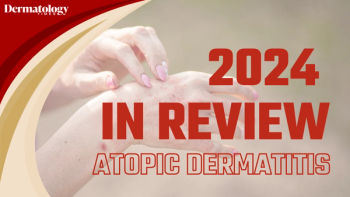
As 2024 comes to a close, Dermatology Times is taking a look back at the studies, therapies, and advances in atopic dermatitis this year.

As 2024 comes to a close, Dermatology Times is taking a look back at the studies, therapies, and advances in prurigo nodularis this year.
These promising results align with what was discovered in the single-ascending dose portion of the trial earlier this year.

As 2024 comes to a close, Dermatology Times is taking a look back at the studies, therapies, and advances in rosacea this year.
In case you missed it, this week we had news about tapinarof’s FDA approval in AD patients 2 and older, new ICD-10 codes for CCCA and FFA, a phase 2 study of INF904, and more.

Renata Block, MMS, PA-C; Ted Lain, MD, MBA, FAAD; Zoe Diana Draelos, MD; and Cheri Frey, MD, FAAD, bust common skin care myths in a Dermatology Times custom video series.
Trust and transparency are key in physician wealth management, according to David Mandell, JD, MBA.

Follow-up phase 3 data showed BF-200 ALA to be a safe and effective therapy for AK, when compared to placebo.

The new research identified notable improvements in disease severity, sweat reduction, and quality of life for patients treated with sofpironium.

In a meta-analysis of over 61 million participants, it was found that AD patients have a 37% risk of developing IBD and similar conditions.
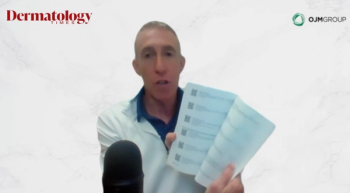
The latest publication from OJM Group provides 7 core strategies for dermatologists looking to meet their financial goals.

Take a look back at this year's newly FDA-approved dermatology devices and drugs.

Topical treatments with plant extracts improved skin hydration and elasticity while reducing melanin and erythema.

The approval is based on positive data stemming from the ADORING clinical trial program.

The supplemental New Drug Application is supported by positive results from the INTEGUMENT-PED and INTEGUMENT-OLE trials.
In case you missed it, this week we had news about the 308 nm excimer light and 2940 erbium laser for vitiligo, the new Diamond technique for the neck and décolleté, potential risk factors for developing CHE in China, and more.

Frequencies of 1/3/10 MHz and 3/10/19 MHz provided pain-free, well-tolerated, and long-lasting results.

The adalimumab biosimilar had an average persistence of 2.5 years, according to this British study.
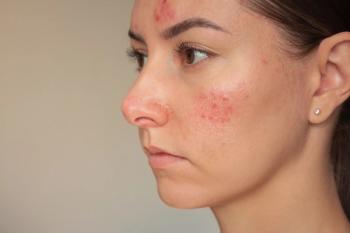
In Middle Eastern communities specifically, patients with higher disease severity and duration are predicted to have poorer psychological outcomes.
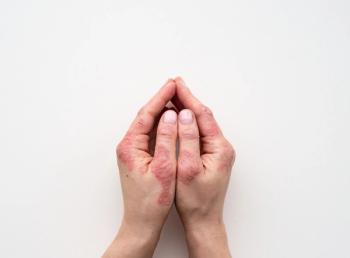
The study found that those who worked with wet hands and had chapped skin had a higher severity of chronic hand eczema.

2024 saw significant progress in vitiligo treatments, including novel drugs, off-label uses, and updated pediatric guidelines for better outcomes.