


Learn more about the in-depth topics covered in the June 2025 print issue of Dermatology Times.
Marie Bosslett is the assistant editor of Dermatology Times® and joined the MJH Life Sciences team in October 2024. She attended Loyola University Maryland in Baltimore and earned a Bachelor of Arts in Communication with minors in marketing and writing. When she’s not writing, Marie enjoys going to concerts, reading on the beach, and spending time with friends and family.
Learn more about the in-depth topics covered in the June 2025 print issue of Dermatology Times.
Dermatology Times is looking back on the top stories in dermatology from the month of June.

Quoin Pharmaceuticals advances QRX003 for Netherton Syndrome, receiving FDA's RPD Designation and showing promising clinical results.

Nektar Therapeutics reveals positive results from the REZOLVE-AD study, showcasing rezpegaldesleukin's efficacy in treating moderate to severe AD.

Almirall showcased groundbreaking research on atopic dermatitis, psoriasis, and actinic keratosis at the 2025 ICD.

Galderma launches clinical trials for nemolizumab, targeting systemic sclerosis and chronic pruritus of unknown origin, addressing critical patient needs.

Abeona Therapeutics' VIITAL trial reveals promising results for RDEB treatment, showcasing significant wound healing and pain relief with Zevaskyn therapy.

Arcutis Biotherapeutics' roflumilast cream 0.15% gains strong AAD endorsement for effective AD management in adults and children.

Sonia Batra, MD, shares effective summer acne solutions using lasers such as Aerolase Neo Elite and AviClear, ensuring tailored care for optimal skin health.

Catch up on dermatology news, highlights, and insights from the past 24 hours.

Explore insights on benzoyl peroxide and benzene risks in acne treatment from experts Renata Block, DMSc, MMS, PA-C, and John Barbieri, MD, MBA.

Discover the latest advancements in vitiligo treatment and awareness as Dermatology Times highlights this year's progress during Vitiligo Awareness Month.
Sonia Batra, MD, dispels common myths and shares expert tips on summer skin care for acne, emphasizing sun protection and tailored regimens.

Explore innovative strategies for managing chronic hand eczema, focusing on personalized care, early treatment, and understanding complex subtypes for better outcomes.

Renata Block, DMSc, MMS, PA-C, speaks with Adam Friedman, MD, FAAD, on innovative teledermatology initiatives in Washington, DC, addressing health care disparities and enhancing community access.
Iris Rubin, MD, highlights SEEN's science-backed hair care, designed for acne-prone skin, improving scalp health and reducing irritation.

Iris Rubin, MD, reveals how her brand SEEN transforms hair products to combat acne, promoting clearer skin through innovative, skin-friendly formulations.

In case you missed it, this week we had news about the FDA approval of dupilumab for bullous pemphigoid, the upcoming INTEGUMENT-INFANT trial for roflumilast, nail trends that challenge clinical diagnosis, and more.

A global survey reveals the significant psychosocial and financial burdens of hidradenitis suppurativa, highlighting the need for improved patient care and treatment options.

Dupilumab gains FDA approval as the first targeted therapy for bullous pemphigoid, offering hope for effective treatment and improved patient outcomes.
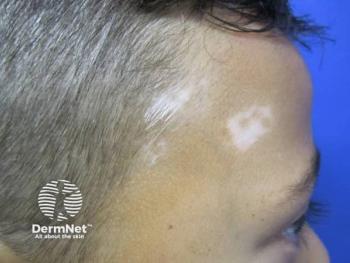
The VALIANT survey uncovers alarming depression rates in vitiligo patients, highlighting the urgent need for improved mental health screenings and interventions.

A real-world study shows the effectiveness of upadacitinib and abrocitinib for moderate to severe atopic dermatitis after 52 weeks of treatment.

Pediatric dermatologist Mercedes E. Gonzalez, MD, discusses roflumilast's promise as a safe, nonsteroidal treatment for atopic dermatitis in infants.

A study reveals the significant emotional burden of work-related chronic hand eczema, highlighting the need for tailored psychological support for affected patients.
Mercedes Gonzalez, MD, discusses the promising INTEGUMENT-INFANT trial, exploring a new non-steroidal treatment for infants with atopic dermatitis.

Discover insights from Peter Lio, MD, on precision medicine in pediatric atopic dermatitis and the promising role of ruxolitinib at the RAD 2025 Conference.
Global studies from LEO Pharma highlight the diagnostic gaps, quality-of-life burdens, and treatment landscape for patients with CHE.

SkinGPT by Haut.AI uses AI to visually simulate skin care results, empowering inclusive, personalized skin care and bridging clinical data with patient insight.
In case you missed it, this week we had news about abrocitinib's flexible dosing for atopic dermatitis, plant-derived exosomes in regenerative skin care, psychosocial support in hidradenitis suppurativa care, and more.

Discover essential sun protection strategies from Dr. Susan Taylor, focusing on the impacts of UV, visible light, and personalized sunscreen choices.