


Advances in atopic dermatitis research could bring longer-lasting biologics and improved treatment adherence.
Maddi Hebebrand is an associate editor of Dermatology Times and joined the MJH Life Sciences team in May 2024. She attended Baldwin Wallace University, studying Media Production and Film, and received her Masters in Digital Media from Ohio University. When she's not writing, Maddi loves to read, attend concerts and spend time with her family.
Advances in atopic dermatitis research could bring longer-lasting biologics and improved treatment adherence.
Explore the top headlines of the week, including insights on the latest clinical trials, therapeutic updates, and more.
This week, we feature top articles from our sister publications on regulatory updates, clinical trial insights, and more.
Christopher Bunick, MD, PhD, emphasizes how dermatologists can improve outcomes through vigilant skin exams and collaborative care with oncology teams.

Explore the top headlines of the month, including insights on regulatory updates, expert pearls, and more.
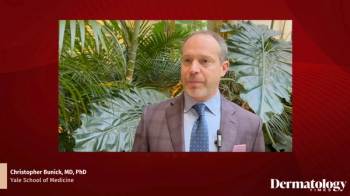
Christopher Bunick, MD, PhD, urged clinicians to move beyond therapeutic inertia and transition patients to advanced systemic therapies.
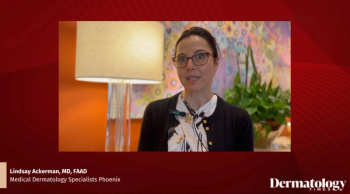
The Phoenix-based dermatologist encourages innovative and patient-tailored strategies to optimize pigment restoration.

Updated FDA policies eliminate many comparative efficacy trials, reducing biosimilar development time and cost by relying more on analytical testing.

Avalo Therapeutics completes enrollment in the LOTUS trial for AVTX-009, targeting hidradenitis suppurativa with promising IL-1β inhibition.

At Fall Clinical 2025, experts discussed the science behind oral IL-23 inhibition, potentially ending the injection-only era for psoriasis therapy.

Catch up on coverage from the entire 2025 Fall Clinical Dermatology Conference held in Las Vegas, Nevada.

Catch up on coverage from the last day of the 2025 Fall Clinical Dermatology Conference held in Las Vegas, Nevada.
Lindsay Ackerman, MD, outlines how ruxolitinib topical has transformed the clinical approach to vitiligo.
Benjamin Lockshin, MD, noted long half-life biologics may allow patients to maintain remission with minimal injections.

Gene expression profiling may allow clinicians, according to Farberg, to predict patient responses to targeted treatments.

Peter Lio, MD, believes that collaboration between science and industry is vital for translating research into meaningful patient benefits.

Catch up on coverage from the third day of the 2025 Fall Clinical Dermatology Conference held in Las Vegas, Nevada.

Clinicians are now aiming for treatment targets such as NRS 0–1, IGA 0–1, and EASI 90 to define successful AD management.

Discover essential dermatology insights from experts at the Fall Clinical Conference 2025, featuring innovative treatment tips and patient care strategies.

Emerging skin treatments present unique clinical challenges that must be anticipated by clinicians.

New data presented at Fall Clinical 2025 reveal that patients in socioeconomically disadvantaged areas are significantly less likely to initiate biologic or small molecule treatments.

Recent FDA approvals for topical roflumilast and ruxolitinib down to age 2 mark major milestones in managing pediatric AD, according to Peter Lio, MD.

Catch up on coverage from the second day of the 2025 Fall Clinical Dermatology Conference held in Las Vegas, Nevada.
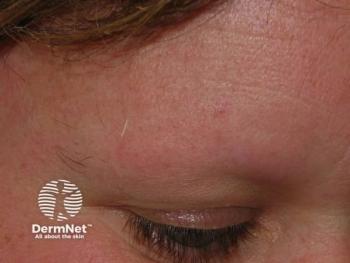
At 52 weeks, the data presented at Fall Clinical showed that 64.8% and 63.3% of adolescents on baricitinib 4 mg achieved significant eyebrow and eyelash regrowth, respectively.

Del Rosso recounts the meeting’s evolution and its consistent mission to bridge science and practice.

The AHEAD guidelines promote a new treatment standard for atopic dermatitis, emphasizing near-complete skin clearance and itch relief.

A new IPC-endorsed framework simplifies psoriasis severity into “topical” versus “systemic” categories to guide treatment more effectively, according to James Song, MD.
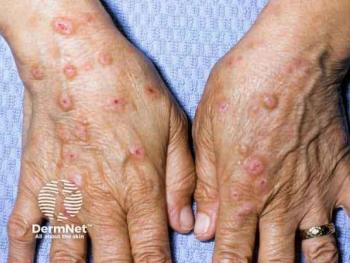
PN is increasingly recognized as a common and severe inflammatory skin disease disproportionately affecting patients with darker skin tones.
Click through this slideshow to see what faces familiar to Dermatology Times will be on the speaker stand at Fall Clinical this week.
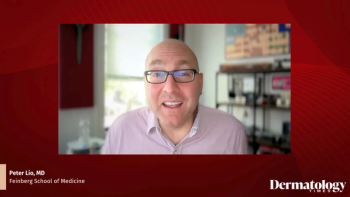
Peter Lio, MD, describes Fall Clinical as an energizing, high-level dermatology meeting focused on practical takeaways and collaboration.