

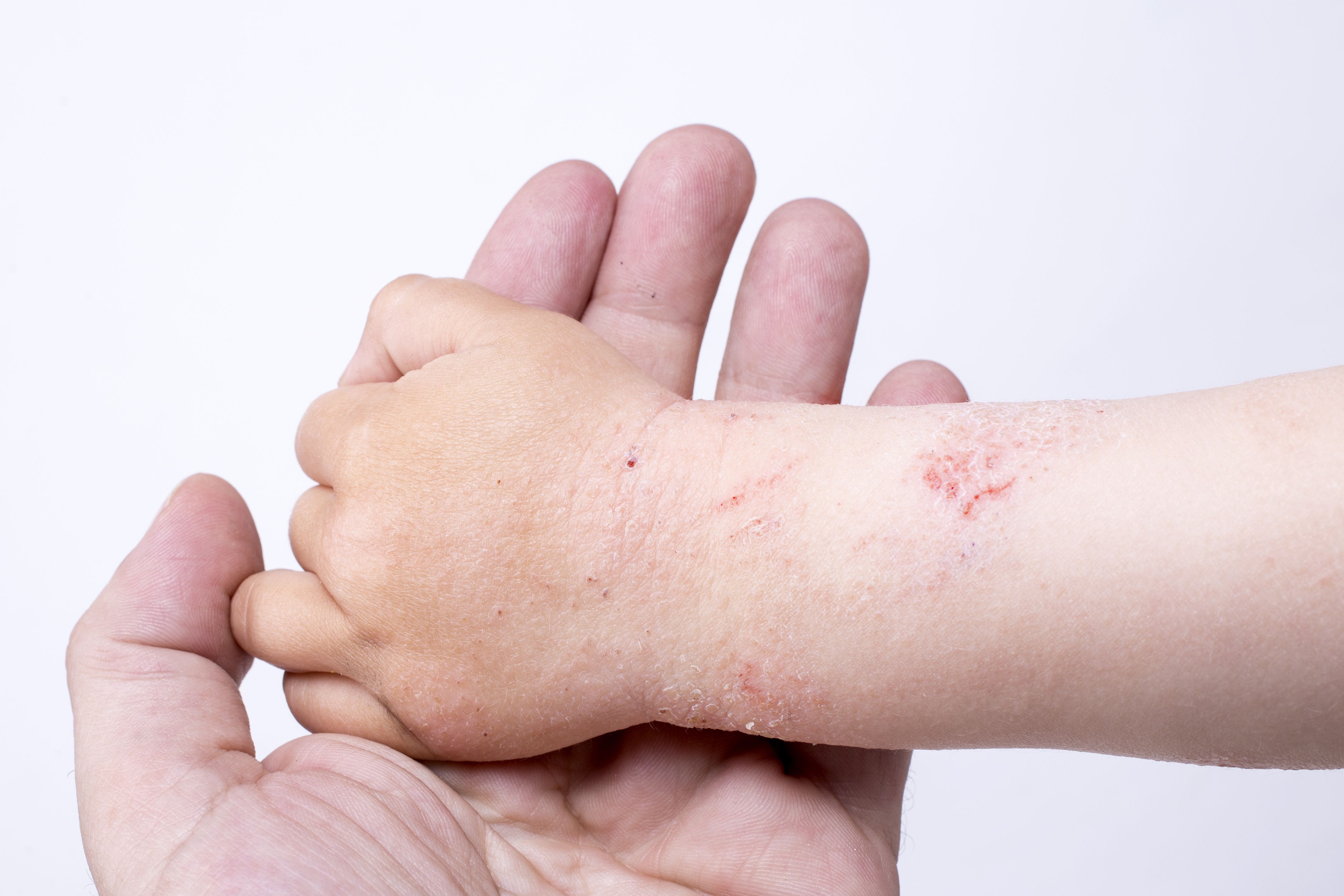

Atopic Dermatitis
Latest News

Advertisement
Latest Videos








CME Content







Advertisement
More News
Study shows that blocking IL-13 improves atopic dermatitis ― a promising finding for IL-13 atopic dermatitis drugs in development.


Patients with moderate-severe atopic dermatitis are at high risk of having inadequate disease control, according to a cross-sectional study in JAMA Dermatology.

Study finds the combination of duplilumab and topical corticosteroids works in hard-to-treat atopic dermatitis cases in adult patients.

FDA approves early, pre-approval trials for pediatric cases

The skin care industry promotes products designed for sensitive skin, yet dermatologists are concerned about the use of skin care products for skin disease.

Observational study shows high heart disease risk in severe and predominantly active atopic eczema.
For some patients with moderate to severe atopic dermatitis, the combination of dupilumab and corticosteroids may be necessary to control flares, a new study shows. Dupilumab is a proven treatment for AD, so where do we go from here? A physician writing in BJD suggests predictive modeling.

Skin biopsies from infants with atopic dermatitis feature important differences compared to adults with atopic dermatitis. These differences could change atopic dermatitis treatment for infants and toddlers with the disease, a study shows.

Three patients achieve 80-100 percent clearance of moderate-to-severe dyshidrosis of the hands and palms after treatment with dupilumab.

Symptomatic relief remains out of reach for many who suffer chronic pruritis. Without drugs specifically approved to treat chronic itch, providers and patients rely on therapies with limited efficacy. Here’s an update of two important clinical trials.
A phase two study of adults with moderate-to-severe atopic dermatitis shows that once-daily oral Janus kinase (JAK) 1 and 2 inhibitor baricitinib relieved itch and improved sleep, a study shows.
The transcription factor "retinoid-related orphan receptor-alpha" (RORA) has been identified as a regulator of T regulatory (Treg) genes responsible for suppressing allergic skin inflammation, researchers report.
The duration of methotrexate administration proves to be longer than that of cyclosporine in atopic dermatitis, according to a small study that compared the two first-line immunosuppressive treatments for atopic dermatitis.
This week during the annual meeting of the American Academy of Dermatology in San Diego, Robert Sidbury, M.D., addressed developments in atopic dermatitis treatments since the publication of treatment guidelines in 2014.
New data and status updates for atopic dermatitis treatments in clinical trials will be presented at the American Academy of Dermatology annual meeting in San Diego this week. In this article, we offer some highlights.
A daily capsule of a cocktail of probiotics may reduce both the severity symptoms in moderate atopic dermatitis and the need for topical corticosteroids to treat symptom flare ups in children.
All children, but healthy controls, had a higher likelihood of behavioral issues. ADHD symptoms of attention, hyperactivity and impulse control, were higher in AD children. Quality of life lower in affected children.
In this article, Drs. Lawrence Eichenfield and Jessica Sprague review some of the most significant findings and developments in pediatric dermatology from the last year beginning with the availability of biologic agents for pediatric psoriasis and atopic dermatitis.
The first patient has been dosed in the phase two study of PR022 (hypochlorous acid, Realm Therapeutics), a topical gel treatment for patients with atopic dermatitis.
A small study finds that the combination of methotrexate and azathioprine is safe and effective as maintenance treatment for patients with moderate-to-severe atopic dermatitis for up to five years.
Moisturizers were described as the “cornerstone of therapy” in atopic dermatitis in the 2014 AAD guidelines for topical therapies in atopic dermatitis, but the products differ greatly by ingredients which can improve the condition or make it worse.
Thinking of psoriasis and atopic dermatitis as a spectrum, rather than separate diseases might lead to better understanding, and potentially better treatments.
Ocular comorbidity risk is already high in patients with atopic dermatitis and may increase even further as biologic agents are introduced, a study shows.
Adult AD may be influenced by childhood eczema, though most adults have no memory of childhood eczema.
Advertisement
Advertisement
Trending on Dermatology Times
1
Icotrokinra Shows Superior Efficacy Over Advanced Oral Therapies in New Psoriasis Meta-Analysis
2
AbbVie Files for Vitiligo Indication, Putting Systemic Therapy Under Regulatory Review
3
Nutrafol Expands Portfolio with First and Only Hair Loss Supplement for Male Patients 50 and Older
4
Introducing Dermatology Times NP/PA Connect
5