




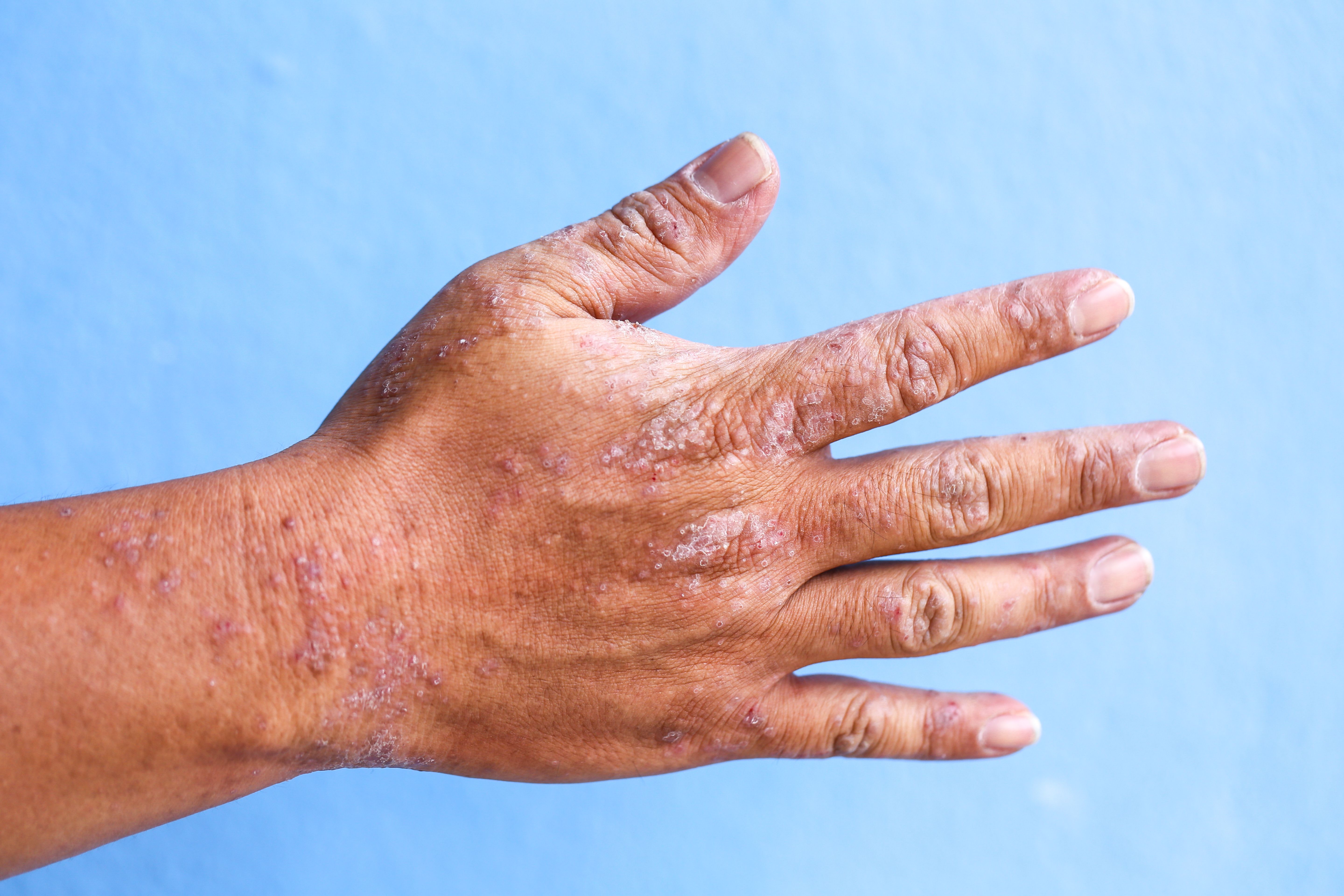

Atopic Dermatitis
Latest News
Advertisement
Latest Videos




CME Content







Advertisement
More News

An expert in skin condition management discusses the case of a 13-year-old male with a prolonged history of AD and early-onset food allergies. Emphasizing the challenges of the steroid treatment cycle, the expert provides insights into integrating parental preferences for "natural" agents alongside effective pharmaceutical options. Additionally, the discussion explores strategies for communicating treatment mechanisms to patients and fostering collaborative engagement in the treatment selection process.
TJ Chao, MPAS, PA-C, examines the case of an 18-year-old female with persistent AD, wherein the patient attributes her flares to her housing conditions. He discusses her treatment plan and addresses the challenges posed by red face syndrome induced by dupilumab, while commenting on how the panel managed patient expectations, treatment preferences, and sustained disease control.

Adbry (tralokinumab-LDRM) is now the first and only FDA-approved biologic for AD binding to and inhibiting IL-13.

Catch up on coverage from this week's virtual Revolutionizing Atopic Dermatitis and Revolutionizing Vitiligo conferences.

Raj Chovatiya, MD, PhD, and Adelaide A. Hebert, MD, FAAD, comment on the newer treatments in AD, highlighting the positive impact these agents have had in managing the disease.

Raj Chovatiya, MD, PhD, and Adelaide A. Hebert, MD, FAAD, discuss the current treatment landscape of atopic dermatitis (AD), as well as key factors when selecting treatment for patients with the disease.

Biolojic’s BD9 is a dual specific antibody that can block both Thymic stromal lymphopoietin and IL-13.

At the 2023 RAD Virtual Conference, Chovatiya presented a session titled, "Living the Cream."

The poster was presented at the 2023 Revolutionizing Atopic Dermatitis (RAD) Virtual Conference.

Dr Lal, an expert in dermatology, presents the case of a 45-year-old female with a history of childhood AD marked by severe symptoms. He recaps a panel conversation on the approach to treatment, emphasizing the importance of initiating effective and long-lasting treatment options for optimal relief.
Karan Lal, DO, MS, FAAD, discusses a case involving a 4-year-old male with atopic dermatitis, covering FDA-approved treatments for this age group, strategies for tapering and stopping treatment, the impact of the atopic march, and challenges with treatment prior authorizations.

Christopher Bunick, MD, PhD, presented the research during a late-breaking research session during the 2023 Revolutionizing Atopic Dermatitis Virtual Conference.

From the December cover feature: Christopher Bunick, MD, PhD; Aaron Drucker, MD, ScM; and Mona Shahriari, MD, share their thoughts on AAD’s updated atopic dermatitis guidelines.

Jennifer Etienne shared her experiences during the shared decision-making patient panel of the 2023 Revolutionizing Atopic Dermatitis Virtual Conference.

A poster from the 2023 Revolutionizing Atopic Dermatitis Conference revealed a link between AD, impaired oral health, and oral dysbiosis.

Alan Irvine, MD, DSc, discusses his Revolutionizing Atopic Dermatitis session and exciting advances in AD.

Approximately 76% of patients reported being "satisfied," while 18% reported they were "very satisfied" with treatment.

KT-474 is a first-in-class, investigational IRAK4 degrader.

An expert in the management of skin conditions provides an overview of a 20-year-old male diagnosed with atopic dermatitis, discussing key insights from a round table discussion. The conversation focused on effective management strategies, best practices for prior authorization approvals, and the significance of treatment vehicles.
Monica Harilall, PA-C, MMS, delves into the case of an 18-year-old female with atopic dermatitis, highlighting the challenges in managing adolescent patients who are self-conscious about their condition and seek rapid results. The discussion explores effective ways to communicate treatment mechanisms to patients and engage them collaboratively in the treatment selection process.
Leading atopic dermatitis experts weigh in on bath routines with different ages, cultures, and more to consult patients and their families.

Zakiya Pressley Rice, MD, took a deep dive into how atopic dermatitis severity and increased rates of grade school absenteeism affect patients with skin of color during a recent Masterclasses in Dermatology meeting.

Understanding these relationships is crucial for developing effective clinical management strategies for patients with AD, according to a recent literature review.

The sNDA is supported by positive data from the phase 3 INTEGUMENT-1 and INTEGUMENT-2 trials.

A phase 1 study found that RPT193 monotherapy led to greater improvements in clinical efficacy than treatment with a placebo.
Advertisement
Advertisement
Trending on Dermatology Times
1
AbbVie Files for Vitiligo Indication, Putting Systemic Therapy Under Regulatory Review
2
Icotrokinra Shows Superior Efficacy Over Advanced Oral Therapies in New Psoriasis Meta-Analysis
3
Nutrafol Expands Portfolio with First and Only Hair Loss Supplement for Male Patients 50 and Older
4
Introducing Dermatology Times NP/PA Connect
5