






Atopic Dermatitis
Latest News
Advertisement
Latest Videos




CME Content







Advertisement
More News

Late-breaking data demonstrating the sustained improvements was presented at the American Academy of Dermatology Annual Meeting.

Peter Lio, MD, explains the importance of having a wide-range of solutions and how he incorporates alternative approaches alongside conventional medicine.
Peter Lio, MD, expands on dosing considerations to treat atopic dermatitis with involvement on the hands and feet for different ages, weights, lifestyles, and more.
Peter Lio, MD, takes a deep dive into the results of the 3 LIBERTY-AD-HAFT study and how it impacts the treatment of hand-foot atopic dermatitis.
Two recent studies delve into outcomes of pediatric populations with atopic conditions and an overview of patient outcomes utilizing a Mendelian randomization analysis.

Raj Chovatiya, MD, PhD, delves into the conditions that could be red, itchy, and not atopic dermatitis. He explains the importance of knowing characteristics for various inflammatory conditions.

Susan Taylor, MD, explained the current state of diversity in clinical trials, what is going well, and opportunities to improve.
Susan Taylor, MD, shared what she wants to know about patients' functionality to treat their atopic dermatitis with hand or foot involvement.

Burnett recently spoke with Dermatology Times to discuss the background, methods, and findings of the late-breaking INTEGUMENT-PED data, as well as its potential real-world and clinical implications.

Eichenfield discusses the late-breaking data on roflumilast cream 0.05% in the pediatric patient population and its implications.

The international observational study aims to understand how moderate to severe AD affects children under 12 years of age, particularly in terms of height, weight, and BMI.

Lio delves into his American Academy of Dermatology Annual Meeting session, "Dietary Triggers and Modifications of Common Dermatologic Conditions: An Evidence Based Approach."

New data was presented at the American Academy of Dermatology Annual Meeting in San Diego, California.
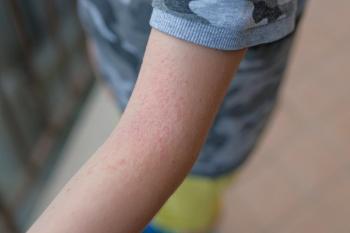
Alphyn’s first-in-class therapeutic is designed to treat the immune system component, and more specifically the bacterial component, of AD.

In addition to the announcement of positive data, Apogee said the trial has already exceeded its objectives ahead of schedule.
Nitin Joshi, PhD, shared CAGE Bio’s development of CGB-500 and why phase 2 EASI scores have the company’s scientific advisory board optimistic.

Test your knowledge on the AAD's recommendations for phototherapy, monoclonal antibodies, JAK inhibitors, and systemic therapies in the latest guidelines.

Raj Chovatiya, MD, PhD, gives a sneak peek of what to expect in atopic dermatitis education at the 2024 American Academy of Dermatology (AAD) Meeting in San Diego, California March 8-12. Since the last meeting, the AAD has released new guidelines to treat the condition.

Researchers have found Staphylococcus aureus may trigger itchiness in atopic dermatitis, opening the door to new treatment approaches in the future.

Learn more about dupilumab-induced conjunctivitis rates and misconceptions, the thriving long-term efficacy of dupilumab over 3 years, and unraveling the itch-flare dynamic in abrocitinib treatment.

The FDA has also granted nemolizumab Priority Review for prurigo nodularis.

Tapinarof cream demonstrated highly statistically significant improvement in the primary end point of vIGA-AD treatment success over vehicle at week 8.

IGA, EASI, and Itch Endpoints Met in First In Human Phase 2 Trial of Zabalafin for Atopic Dermatitis
Interim data from the clinical trial was presented in a poster at the South Beach Symposium, with itch reduction demonstrating immediacy and long-term capability.
A discussion among roundtable participants revolved around the importance of effective communication, the impact of prolonged use of topical steroids, and the need for trust building in recommending novel treatment options.

Exposure led to an increase in total plasma IgE levels but reduced epidermal thickening, mast cell number, and plasma histamine levels in the early stages of AD.
Advertisement
Advertisement
Trending on Dermatology Times
1
AbbVie Files for Vitiligo Indication, Putting Systemic Therapy Under Regulatory Review
2
Nutrafol Expands Portfolio with First and Only Hair Loss Supplement for Male Patients 50 and Older
3
Icotrokinra Shows Superior Efficacy Over Advanced Oral Therapies in New Psoriasis Meta-Analysis
4
Introducing Dermatology Times NP/PA Connect
5