










Studies indicate physicians are fried, but a new review says it’s not as bad as it sounds.
Studies indicate physicians are fried, but a new review says it’s not as bad as it sounds.

Dermatologists who sell cosmeceutical products in their offices have options. Among the popular choices: They can sell already branded lines or brand their own skincare, hair, nail and other products.
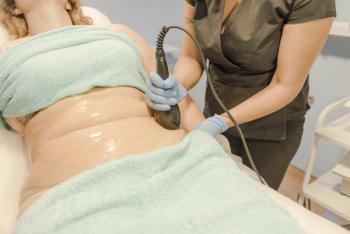
Dermatologists can use online patient reviews as a tool to educate patients about minimally-invasive fat reduction procedures, according to a new study.

AIVITA Biomedical, a biotech firm that focuses on regenerative medicines such as stem cell applications, recently named two new members to its senior management team.
Two dermatology practices join forces to deliver excellent treatment options to patients in El Paso, Texas.

As more dermatologists implement EHR systems, many are wondering if EHR adoption will increase or decrease their medical legal liability. Dr. David Goldberg provides his insight in this month's legal column.

Two dermatology firms combine to improve their medical and cosmetic dermatology services, existing treatments and procedures.

Kleresca's new biophotonic technology received CE mark of approval, which will allow it to expand in the U.S., Canada, Australia and throughout Europe.

Developing doctor-patient relationships are key to avoiding oversimplification of characteristics like race and gender, which can result in stereotyping and medical mismanagement.

Pennsylvania Dermatology Partners tells its story of technological support and success.

A new Centers for Medicaid and Medicare Services plan for payment for evaluation and management services (E/M) has been proposed and CMS is currently accepting comments through 5 p.m., Sept. 10. The new rules would apply to all E/M services delivered after Jan. 1, 2019.

While claims don’t always lead to court cases, they can lead to stress, says Stephen E. Wolverton, M.D., a dermatologist with Indiana University Health in Bloomington, Ind. Learn more about managing the stress associated with malpractice claims.

A burn injury and questions unasked leads to a malpractice claim.

For many dermatologists, successfully treating patients means taking a more patient-centered approach to care. This table includes 11 tips from Dr. Neil Prose, Duke University Medical Center.
A Johns Hopkins study finds that physicians who use stigmatizing language in their patients' medical records, may actually be hurting the care those patients get for years to come.
While patient-centered medicine works well for patients, what does it mean for the practice?

Dr. Jam is a successful medical and cosmetic dermatologist who posted a video online intended as a promotional video. His patients are suing claiming negligence. Learn more here.

There is increasing patient injury and legal action from cutaneous laser surgery, particularly when performed by non-physicians.

Study shows how primary care and dermatology practices can collaborate to serve underserved populations.

Some melanoma patients prefer fewer follow-up visits, but only if self-skin examinations were utilized at home or teledermatology implemented for a quick assessment.

The AMA’s chief information officer talks digital health technology with Dermatology Times.
Specialties are being affected by policy reforms that impact physician payment. In this article, we breakdown the payment models and highlight the pros and cons of each model.
Laser technologies can be an added benefit to your practice, but be a smart consumer, experts say.
Is it misuse to use medication for off-label uses? A patient sues after developing facial pain and other symptoms associated with the use of a topical for scabies. Is this physician guilty of practicing medicine outside the standard of care?