

News|Articles|November 19, 2025
Journal Digest: November 19, 2025
Author(s)Marie Bosslett, Assistant Editor
Listen
0:00 / 0:00
Key Takeaways
- ETI treatment in cystic fibrosis patients is linked to increased acne severity, with proactive screening and management recommended.
- AI shows promise in acne diagnosis, but representation gaps exist, particularly regarding skin color and ethnicity in model development.
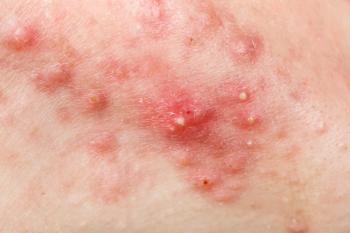
This review of the latest dermatologic studies highlights new research on acne, including post-treatment recurrence, the use of AI, severity in cystic fibrosis patients, and more.
Advertisement
Journal of Cosmetic Dermatology | Cutaneous Adverse Effects of Elexacaftor-Tezacaftor-Ivacaftor: A Single Center Cohort Study on Acne Severity in Adults With Cystic Fibrosis
This single-center cohort study evaluated the prevalence, timing, and impact of acne associated with elexacaftor-tezacaftor-ivacaftor (ETI) in 31 adults with cystic fibrosis. Twelve participants (39%) reported acne exacerbation after starting ETI, typically emerging around 4.5 months. Facial involvement rose sharply from 17% pre-ETI to 100% post-ETI, while chest and back involvement increased without statistical significance. Although Acne-specific Quality of Life scores worsened across all domains, changes were not statistically significant. Most affected individuals used over-the-counter treatments, over half initiated prescription topicals, and half were referred to dermatology; no participants discontinued ETI. The authors recommend proactive screening and early acne management within CF care, while noting limitations such as small sample size and lack of objective severity grading.1
International Journal of Dermatology | Artificial Intelligence Use in Acne Diagnosis and Management—A Scoping Review
This scoping review examined current applications of artificial intelligence (AI) in acne diagnosis and management. A search of PubMed, Cochrane, and Scopus identified 105 relevant studies. Most research focused on acne diagnosis (96%), while far fewer addressed management. The majority of tools used image-based approaches, primarily deep learning models (76%), followed by classical machine learning and ensemble methods. Ensemble models demonstrated the highest average diagnostic accuracy (89.7%), slightly outperforming deep learning, large language models, and traditional machine learning. Despite AI’s promise for remote, consistent acne assessment, the review found substantial gaps in representation: only 13% of studies reported patient skin color or ethnicity, and less than 4% included skin tone data in model development.2
Journal of Cosmetic Dermatology | Benefits of a Compensating Dermocosmetic Routine as an Adjunct to Treatments in Patients With Mild to Very Severe Acne: Results From an Observational Multicenter Study
This multicenter observational study evaluated a compensating dermocosmetic (DC) routine—featuring a barrier-supporting cleanser and moisturizer—as an adjunct to topical and systemic acne treatments in 2,061 patients from five countries. Participants, aged 12–66 with mild to very severe acne, used the DC products daily for three months while continuing standard therapies such as adapalene, benzoyl peroxide, or isotretinoin. Significant improvements were observed in skin barrier function: over 70% of patients showed at least a one-grade reduction in erythema, desquamation, and dryness, and more than 82% reported relief from discomfort symptoms, including itching and burning. Sebum levels decreased by 55.7%. Acne severity improved in 81.5% of patients, accompanied by a 60% reduction in Cardiff Acne Disability Index scores. Tolerance and satisfaction rates exceeded 95% for both dermatologists and patients, who also favored the DC routine over prior regimens.3
British Journal of Health Psychology | Planning and optimizing a digital self-management support intervention: Acne Care Online
This study describes the development of Acne Care Online, a digital self-management intervention designed to help teenagers and young adults better understand, access, and adhere to evidence-based acne treatments. Using a theory-, evidence-, and person-based approach, researchers conducted qualitative interviews with young people, parents, and healthcare professionals; systematic reviews; extensive public involvement; and behavioural analysis. Key barriers identified included confusion between cosmetic skincare and medical treatments, low adherence to topical therapies, unrealistic expectations, and reluctance to seek medical help. The intervention was shaped using behaviour change models, including self-efficacy theory and the common-sense model, and refined through iterative “think-aloud” interviews with 53 young people. Acne Care Online ultimately comprised modules on effective treatments, help-seeking, and coping with the psychological impact of acne. Early feedback indicated high acceptability, relevance, and potential to improve knowledge, confidence, and treatment behaviours.4
Journal of Cosmetic Dermatology | Risk Factors of Acne Recurrence After Treatment and Establishment of an Early Warning Model
This retrospective study analyzed 218 patients to identify factors contributing to acne recurrence and to develop an early warning prediction model. Within 12 months after treatment, 48% of patients experienced recurrence, ranging from mild to severe. Logistic regression revealed several independent risk factors: higher BMI, smoking and alcohol use, elevated anxiety (SAS) and depression (SDS) scores, staying up late, unhealthy dietary habits, and prolonged electronic device use. Weekly pillowcase replacement emerged as a protective factor. These variables were incorporated into a predictive model with strong performance, achieving 88.6% sensitivity, 80.5% specificity, and an AUC of 0.846. The findings highlight the significant influence of modifiable lifestyle and psychological factors on acne relapse.5
References
1. Smith AD, Lyons CE, Somerville L, Flowers RH, Kaplan E, Albon D. Cutaneous Adverse Effects of Elexacaftor-Tezacaftor-Ivacaftor: A Single Center Cohort Study on Acne Severity in Adults With Cystic Fibrosis. J Cosmet Dermatol. 2025;24(11):e70528. doi:10.1111/jocd.70528
2. Frederickson KL, Gui H, Barbieri JS, Daneshjou R. Artificial Intelligence Use in Acne Diagnosis and Management-A Scoping Review. Int J Dermatol. Published online November 6, 2025. doi:10.1111/ijd.70110
3. Odeimi J, Broallier M, Sotiriou E, et al. Benefits of a Compensating Dermocosmetic Routine as an Adjunct to Treatments in Patients With Mild to Very Severe Acne: Results From an Observational Multicenter Study. J Cosmet Dermatol. 2025;24(11):e70531. doi:10.1111/jocd.70531
4. Guo K, Lu Z, Deng H, Shao Y. Risk Factors of Acne Recurrence After Treatment and Establishment of an Early Warning Model. J Cosmet Dermatol. 2025;24(11):e70545. doi:10.1111/jocd.70545
5. Essery R, Steele M, Easton S, et al. Planning and optimizing a digital self-management support intervention: Acne Care Online. Br J Health Psychol. 2025;30(4):e70033. doi:10.1111/bjhp.70033
Newsletter
Like what you’re reading? Subscribe to Dermatology Times for weekly updates on therapies, innovations, and real-world practice tips.
Advertisement
Related Content
Advertisement


Latest CME




Advertisement
Advertisement
Trending on Dermatology Times
1
FDA Accepts Galderma’s BLA Resubmission for Liquid Neuromodulator RelabotulinumtoxinA
2
AbbVie Files for Vitiligo Indication, Putting Systemic Therapy Under Regulatory Review
3
Icotrokinra Shows Superior Efficacy Over Advanced Oral Therapies in New Psoriasis Meta-Analysis
4
Introducing Dermatology Times NP/PA Connect
5