

News|Articles|February 4, 2026
Journal Digest: February 4, 2026
Listen
0:00 / 0:00
Key Takeaways
- Lebrikizumab, an IL-13 inhibitor, showed marked improvement in a patient with refractory benign familial pemphigus, suggesting potential as a therapeutic strategy.
- The patient experienced near-complete clearance of symptoms and improved quality of life with no adverse effects over five months.
Explore innovative treatments for skin conditions, including lebrikizumab for pemphigus and low-level laser therapy for hair loss.
Advertisement
Journal of the American Academy of Dermatology: Case Reports | Benign Familial Pemphigus Treated With Lebrikizumab
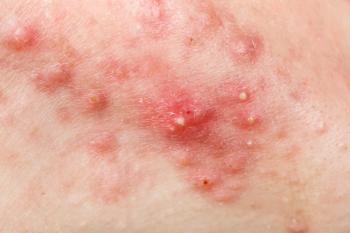
This case report describes a woman in her 60s with benign familial pemphigus (Hailey-Hailey disease), refractory to decades of topical and systemic therapies, who experienced marked clinical improvement with off-label lebrikizumab, an IL-13 inhibitor. The patient had genetically confirmed ATP2C1 mutation–associated disease with painful, erosive intertriginous plaques and secondary infection, which was initially treated with antibiotics before she started lebrikizumab. After receiving two 500-mg loading doses, she demonstrated near-complete clearance of fissures and erosions, substantial reductions in itch and symptom burden, and significant improvements in quality-of-life scores, with sustained benefits on maintenance dosing through 5 months and no adverse effects. This observation contributes to the growing evidence that inhibiting the IL-13 pathway may be an effective therapeutic strategy for refractory benign familial pemphigus, although larger controlled studies are needed to confirm its efficacy and durability.1
Journal for ImmunoTherapy of Cancer | Structural Changes From Wild-Type Define Tumor-Rejecting Neoantigens
In a high–mutational burden cutaneous squamous cell carcinoma (cSCC) model, investigators demonstrated that standard neoantigen prioritization based solely on MHC binding is insufficient to identify tumor-rejecting targets, and that structural features governing T-cell receptor (TCR) recognition are critical. Using a UV-induced murine cSCC model that recapitulates human disease, the investigators identified 2 CD8⁺ T cell–mediated tumor-rejecting neoantigens, mKars and mPicalm.2, which constrained tumor growth after vaccination. One neoantigen-mediated tumor rejection occurred through improved MHC binding, while the other did so despite having a similar MHC affinity to the wild-type peptide by exposing a larger, more hydrophobic mutated residue to the TCR, as revealed by structural modeling. Across multiple cancer models and MHC alleles, increased solvent accessibility of the mutated residue, particularly when MHC binding differences were minimal, distinguished tumor-rejecting neoantigens from nonimmunogenic ones, whereas sequence-based features alone did not. These findings support incorporating structural modeling of peptide–MHC complexes into neoantigen selection to improve the design of personalized cancer vaccines for cSCC and other malignancies.2
Journal of Cosmetic Dermatology | Enhancing Quality of Life and Emotional Well-Being in Atopic Dermatitis Patients: Clinical Evidence of a Dermocosmetic Lipid-Replenishing Regimen
In an open-label, 4-week study of 21 adults with moderate to severe atopic dermatitis, a comprehensive lipid-replenishing dermocosmetic regimen combining a gentle cleansing oil and an emollient balm produced significant improvements in clinical severity, skin barrier function, hydration, pruritus, sleep disturbance, and quality of life. Mean SCORing Atopic Dermatitis (SCORAD) scores decreased by 27%, with particularly strong reductions in itch (59%) and insomnia (62%), and transepidermal water loss fell by 27% and skin hydration increased by 89%, confirming objective barrier repair. Quality of life improved markedly, with a 68% reduction in Dermatology Life Quality Index scores and substantial gains across emotional, social, and functional domains. Patient-reported outcomes showed large improvements in comfort, irritation, and well-being, with high cosmetic acceptability, strong preference over usual skin care, and willingness to continue use. Together, these findings suggest that integrating lipid-replenishing cleansing with intensive moisturization can meaningfully complement pharmacologic therapy by addressing both the biophysical barrier defect and the psychosocial burden of atopic dermatitis.3
Journal of the American Academy of Dermatology | Safety and Efficacy of Envudeucitinib, a Highly Selective, Oral Allosteric TYK2 Inhibitor, in Patients With Moderate to Severe Plaque Psoriasis
Long-term results from an open-label extension of the phase 2 STRIDE study (NCT05600036) showed that envudeucitinib, a highly selective oral TYK2 inhibitor, delivered durable efficacy and a favorable safety profile over 52 weeks in patients with moderate to severe plaque psoriasis. Among patients receiving the preferred 40-mg twice-daily dose, 78% achieved a 75% or greater Psoriasis Area and Severity Index score (PASI 75), 61% achieved PASI 90, and 39% achieved PASI 100 at week 52, with sustained improvements also seen in Static Physician Global Assessment responses, itch, and quality of life. Clinical responses deepened over time, with most week-12 responders maintaining benefit through 1 year, and many nonresponders continuing to improve. Treatment was generally well tolerated, with mostly mild to moderate adverse events, low discontinuation rates, no deaths, and no safety signals typically associated with Janus kinase inhibition. Pharmacokinetic data demonstrated continuous 24-hour TYK2 inhibition with the twice-daily regimen, supporting durable disease control. Together, the findings support envudeucitinib’s potential as a next-generation oral therapy for the long-term management of plaque psoriasis and informed its advancement into phase 3 development.4
Dermatologic Therapy | Long-Term Efficacy and Safety of Low-Level Laser Therapy for Androgenetic Alopecia: A 12-Month Prospective Trial
In a 48-week prospective, multicenter open-label study of 68 adults with androgenetic alopecia (AGA), long-term home-use low-level laser therapy (LLLT) produced sustained and progressive improvements in hair density and thickness with excellent tolerability. Mean hair density increased by 25.6% (from 99.2 to 124.2 hairs/cm²) and hair shaft thickness by approximately 16% over 12 months, with statistically significant gains emerging by 16 to 24 weeks and continuing through week 48, without evidence of plateau. Benefits were consistent among men and women and across mild, moderate, and severe disease. Nearly 60% of participants showed visible improvement on global photographic assessment, and more than 98% demonstrated stabilization without progression. Patient satisfaction was high, adherence exceeded 97%, and no device-related adverse events were reported. The findings support LLLT as a safe, noninvasive, long-term treatment option that can deliver durable hair regrowth and disease stabilization for patients with AGA, including those who are unable or unwilling to use pharmacologic therapies.5
References
- Mummareddy H, Aduasumilli N, Friedman A, Tolete C, Zahn J, Tjahjono L. Benign familial pemphigus treated with lebrikizumab. JAAD Case Reports. Published online January 13, 2026. doi:10.1016/j.jdcr.2026.01.006
- Adams AC, Macy AM, Borden ES, et al. Structural changes from wild-type define tumor-rejecting neoantigens. J Immunother Cancer. 2025;13(10):e013148. doi:10.1136/jitc-2025-013148
- Gaudin M, Geoffroy A. Enhancing quality of life and emotional well-being in atopic dermatitis patients: clinical evidence of a dermocosmetic lipid-replenishing regimen. J Cosmet Dermatol. 2026;25(1):e70658. doi:10.1111/jocd.70658
- Papp KA, Jacobs S, Sofen H, et al; Open-Label Extension Study Team. Safety and efficacy of envudeucitinib, a highly selective, oral allosteric TYK2 inhibitor, in patients with moderate-to-severe plaque psoriasis: results from the 52-week open-label extension period of the phase 2 STRIDE study. J Am Acad Dermatol. 2026;94(1):187-195. doi:10.1016/j.jaad.2025.10.005
- Shin JW, Paik K, Na JI, Lew BL, Huh CH. Long-term efficacy and safety of low-level laser therapy for androgenetic alopecia: a 12-month prospective trial. Dermatol Ther. Published online January 8, 2026. doi:10.1155/dth/6621458
Newsletter
Like what you’re reading? Subscribe to Dermatology Times for weekly updates on therapies, innovations, and real-world practice tips.
Advertisement
Related Content
Advertisement

Latest CME






Advertisement
Advertisement
Trending on Dermatology Times
1
AbbVie Files for Vitiligo Indication, Putting Systemic Therapy Under Regulatory Review
2
Icotrokinra Shows Superior Efficacy Over Advanced Oral Therapies in New Psoriasis Meta-Analysis
3
Nutrafol Expands Portfolio with First and Only Hair Loss Supplement for Male Patients 50 and Older
4
Introducing Dermatology Times NP/PA Connect
5