

News|Articles|December 16, 2025
- Dermatology Times, Balancing Pathophysiology and Patient Lifestyle in Acne Management, December 2025 (Vol. 46. Supp. 11)
- Volume 46
- Issue 11
Balancing Pathophysiology and Patient Lifestyle in Acne Management: Part 1
Author(s)Dermatology Times Staff
Listen
0:00 / 0:00
Key Takeaways
- Acne management requires addressing pathophysiology's four pillars: increased C. acnes, sebum production, inflammation, and follicular hyperkeratinization.
- Recent advancements in topical treatments, like fixed-dose combination gels and clascoterone cream, offer comprehensive mechanisms without oral therapy.
In part 1 of this supplement, experts discuss current and emerging treatments for patients, considering lifestyle choices.
Acne’s profound challenge lies in its diverse clinical expression, its psychosocial burden, and the impact of both patient behaviors and scientific results. Although therapeutic innovation has expanded the clinician’s toolbox, the art of acne care still relies on clear communication, thoughtful regimen design, and an understanding of the individual behind the diagnosis.
Across 3 recent Dermatology Times Case-Based programs, Hilary Baldwin, MD, a dermatologist at Rutgers University Robert Wood Johnson Medical Center in New Brunswick, New Jersey, and medical director of the Acne Treatment and Research Center in Brooklyn, New York; and James Del Rosso, DO, dermatologist, Mohs micrographic surgeon, and research director at JDR Dermatology Research in Las Vegas, Nevada, shared patient scenarios illustrating how clinical reasoning, lifestyle considerations, psychological factors, and evolving topical agents shape real-world decisions. When examined together, these conversations present a cohesive picture of modern acne care: grounded in pathophysiology, responsive to patient preferences, and refined through education and partnership.
Understanding the Current Acne Landscape
At the heart of Baldwin’s teaching lies a structured approach to pathogenesis. She reminded participants that “we divide acne pathophysiology into 4 primary pillars…increased C [Cutibacterium] acnes, increased sebum production, inflammation, and follicular hyperkeratinization.” This framework serves as a clinical guide and an educational tool. By aligning therapies with these pillars, clinicians can rationally target multiple drivers of acne while helping patients understand why each medication matters.
Baldwin often illustrates this by drawing a grid during patient consultations, with 4 boxes representing 4 problems and the medications chosen to address them. The grid becomes a shared road map, and, as she explained, it supports trust building because the patient “knows the logic” behind the plan. Baldwin emphasized that the more pillars a regimen addresses, the more predictable and durable its results will be. This perspective becomes especially useful when discussing why combination therapy or long-term maintenance is necessary.
In recent years, the landscape of topical acne has undergone significant evolution. Both Baldwin and Del Rosso remarked on how far the field has come from the limited, often harsh options available decades ago. Baldwin noted that although there is always room for simpler products with fewer adverse effects, she is “pretty happy” with the current armamentarium. The addition of a fixed-dose triple-combination gel (adapalene, benzoyl peroxide, and clindamycin) and the introduction of clascoterone cream 1%, the first topical androgen receptor inhibitor, were highlighted in all 3 programs as significant advances. “These 2 topical agents have really brought us to a new place in acne therapy,” Baldwin said, particularly because they provide comprehensive mechanisms of action without requiring oral therapy.
The Adolescent Athlete With Comedonal Acne
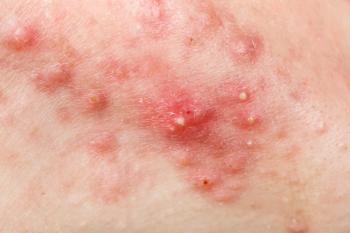
The first scenario, represented across all 3 programs, involved a teenage girl struggling with moderate comedonal acne. She played volleyball, wore makeup during practices, often skipped face cleansing afterward, and felt embarrassed enough to avoid team photos. Her father shared that her confidence was declining. She had tried salicylic acid products purchased over the counter, but they either offered little benefit or caused irritation.
These details immediately resonated with the clinicians. Teenagers, they agreed, often face barriers that have little to do with the pathology of acne itself. Busy schedules, unpredictable routines, self-consciousness, and the competing pressures of athletics, academics, and social media frequently lead to inconsistent cleansing and skipped applications. As one participant remarked, “The more you tell them, and the more you educate them, I think they’re going to be more adherent.” Education, especially in written form, becomes a critical tool. Baldwin said she provides every patient with a typed AM/PM routine, explaining that “education on how to use products is more important than just prescribing them.”
In these adolescence-driven cases, most panelists begin with a relatively simple regimen designed to build tolerance. Tretinoin or adapalene is introduced with instructions to start slowly and increase frequency as tolerated. A benzoyl peroxide cleanser is used only several times a week at first to avoid excessive dryness. Makeup removal is emphasized, particularly after sports. Moisturizers, once considered taboo for acne patients, are recommended as essential adhesion tools.
Yet comedonal acne can be stubborn, and the panelists noted that after several weeks, partial improvement is common but often insufficient for patient satisfaction. Baldwin explained her preference for add-on rather than replacement agents at this stage. If improvement is present but modest, the clinician should fill the remaining “pillar” gaps, in many cases adding clascoterone cream to address persistent sebum production.
When patients express discouragement or impatience, the clinicians stressed the importance of reframing expectations. Baldwin often reminds teens and their parents: “Acne medicine doesn’t get rid of the pimples you have; it stops the ones that are forming.” This reframing is essential for adherence, as it shifts focus from immediate lesion clearance to prevention of future flares.
The collective message from the 3 programs was clear: Teen patients benefit most from a measured, educational, and incremental approach that respects their lifestyle constraints but does not underestimate the emotional weight of their condition.
Conclusion: A Modern Model of Acne Care
Across these case-based discussions, a portrait of contemporary acne management emerges; one defined not by rigid protocols but by adaptable, patient-centered thinking. Acne is a chronic, multifactorial, and deeply personal condition. Effective treatment requires both scientific precision and interpersonal skill.
Baldwin summarized this philosophy aptly: “Managing acne isn’t about finding the magic molecule, it’s about matching the right drug, in the right form, for the right patient.” And as Del Rosso added, “Not everybody’s the same…but it doesn’t mean it doesn’t bother them and they wouldn’t want to get rid of acne.”
Together, these insights underscore the clinician’s evolving role: expert, educator, coach, and partner. With an ever-expanding therapeutic toolbox and a deeper appreciation of patient diversity, clinicians are better equipped than ever to deliver meaningful, sustained improvement for patients across the acne spectrum.
Articles in this issue
Newsletter
Like what you’re reading? Subscribe to Dermatology Times for weekly updates on therapies, innovations, and real-world practice tips.
Related Content


Latest CME





Trending on Dermatology Times
1
FDA Accepts Galderma’s BLA Resubmission for Liquid Neuromodulator RelabotulinumtoxinA
2
AbbVie Files for Vitiligo Indication, Putting Systemic Therapy Under Regulatory Review
3
Introducing Dermatology Times NP/PA Connect
4
Icotrokinra Shows Superior Efficacy Over Advanced Oral Therapies in New Psoriasis Meta-Analysis
5